
Finding the Best Blinds for Privacy in Your Home
- Blindsmart im
- Oct 29
- 14 min read

When you’re looking for the best blinds for privacy, it’s easy to get overwhelmed with options. But time and again, three styles consistently come out on top: Roller, Venetian, and Roman blinds. They all excel at controlling light and keeping prying eyes out, but each does it in its own unique way.
Your Guide to Choosing the Right Privacy Blinds
Let's be honest, finding that sweet spot between a bright, light-filled room and a private, personal space can be a real challenge. It's an issue anyone with overlooked windows or a home on a busy street knows all too well. The secret isn't finding one "perfect" blind, but rather the right blind for your space and your needs.
This guide is here to help you navigate the choices. We'll break down how different blind types work, look at the best materials for the job, and give you the confidence to pick the right window dressing for every room, from the living room to the bedroom.
Why Privacy is a Priority
The need for privacy isn't just a feeling; it's a major factor shaping what we buy for our homes. People want window treatments that don't just look good but also create a genuine sense of seclusion, and this trend is driving huge growth in the market.
In the United Kingdom, the blinds market is a real heavyweight. It’s growing fast, largely because we all want more privacy and better energy efficiency. In fact, blinds pulled in a massive 62.42% of revenue share in the UK market in 2024, showing just how much we favour them over curtains or other options. If you're interested in the numbers, you can dive into the full report on window blinds.
This huge market share speaks volumes about how well modern blinds meet the demands of everyday life. They give us the control we crave. To help you narrow down your search, let’s start with a quick overview of the top three contenders for privacy.
Roller Blinds: A single, solid piece of fabric that provides an unbroken shield against the outside world.
Venetian Blinds: Clever adjustable slats let you fine-tune the balance between light and privacy with a simple twist.
Roman Blinds: Offer the best of both worlds – the soft, luxurious feel of curtains with the neat functionality of a blind.
Each of these has its own strengths. By getting to know what makes them different, you'll be in a much better position to choose a blind that not only secures your privacy but also beautifully complements your home's style.
Quick Guide to Top Privacy Blinds
To make things even simpler, here's a quick rundown of our top three privacy champions. This table summarises what each blind does best, so you can see at a glance which one might be right for you.
Blind Type | Key Privacy Feature | Best For | Light Control |
|---|---|---|---|
Roller Blinds | Solid fabric barrier (especially blackout) | Bedrooms, bathrooms, any room needing total block-out. | Excellent (all or nothing) |
Venetian Blinds | Adjustable slats for precise angling | Living rooms, kitchens, offices, street-facing windows. | Very high (tilt to adjust) |
Roman Blinds | Lined, thick fabric pleats | Living rooms, dining rooms, bedrooms. | Good to Excellent (depending on fabric and lining) |
As you can see, the "best" option really depends on the room and how you use it. A bedroom needs a different solution to a home office, and this table helps point you in the right direction from the get-go.
How to Pinpoint Your Ideal Privacy Level
Before you even start looking at blinds, it’s worth taking a moment to figure out what "privacy" actually means for you and your home. The perfect blind for a living room that faces the street is going to be worlds apart from what you need in an upstairs bathroom. Think of privacy less like an on/off switch and more like a dimmer dial you can adjust for each room's purpose and location.
A good starting point is to think about the time of day. Your privacy needs can change dramatically from noon to night. A blind that works beautifully when the sun is up might leave you feeling completely exposed once it's dark outside and you've switched the lights on inside.
This is why it helps to break privacy down into different levels. Thinking about it this way lets you assess each window individually and find its perfect match. If you define your needs first, you'll avoid that sinking feeling of buying a gorgeous blind that just doesn't do the job you hired it for.
Daytime vs Night-time Privacy
The biggest split is usually between what you need during the day and what you need at night. In the daytime, you probably want to stop people on the pavement from looking in, but you still want to let all that lovely natural light flood the room. Picture a home office where you need to concentrate without feeling like you're in a fishbowl, but you really don't want to work under artificial lights all day. That’s daytime privacy.
Night-time privacy, on the other hand, is all about creating a solid barrier. When your lamps are on, your home becomes a brightly lit stage for anyone looking in. For ground-floor living rooms or any bedroom, you need something that completely blocks the view from the outside, keeping your personal space truly private. This means choosing materials that don't turn see-through when they're lit from behind.
One thing to watch out for is the "silhouette effect." Lighter, more translucent fabrics might seem private during the day, but at night they can reveal shadows and movements to anyone outside, which can really undermine your sense of security.
To figure out what you need, just walk through your house and think about each room’s job and how visible it is.
Street-Facing Windows: These are the big ones. They usually need a high level of both daytime and night-time privacy.
Overlooked Gardens: Here, your priority might be daytime privacy, so you can enjoy your garden view without feeling watched by the neighbours.
Upstairs Windows: These generally need less thought, unless they happen to look directly into a neighbour's window.
Do You Need a Total Blackout?
Moving beyond everyday privacy, we get to total blackout. This is the ultimate level of privacy and light control, designed to plunge a room into darkness by blocking virtually all incoming light. It’s not just about stopping people from seeing in; it's about creating a completely dark and sealed-off sanctuary.
This is an absolute game-changer for bedrooms, where even a tiny sliver of light from a streetlight or a neighbour’s security motion sensor can be enough to disturb your sleep. Nurseries are another classic example, where a proper blackout blind can be a lifesaver for encouraging healthy sleep patterns. It's the best you can get when you need absolute control over your environment, giving you total peace of mind and an uninterrupted night's rest. To get this right, you'll need to look for specific blackout fabrics or a blind designed for a really snug fit against the window frame.
Exploring the Best Blind Styles for Privacy
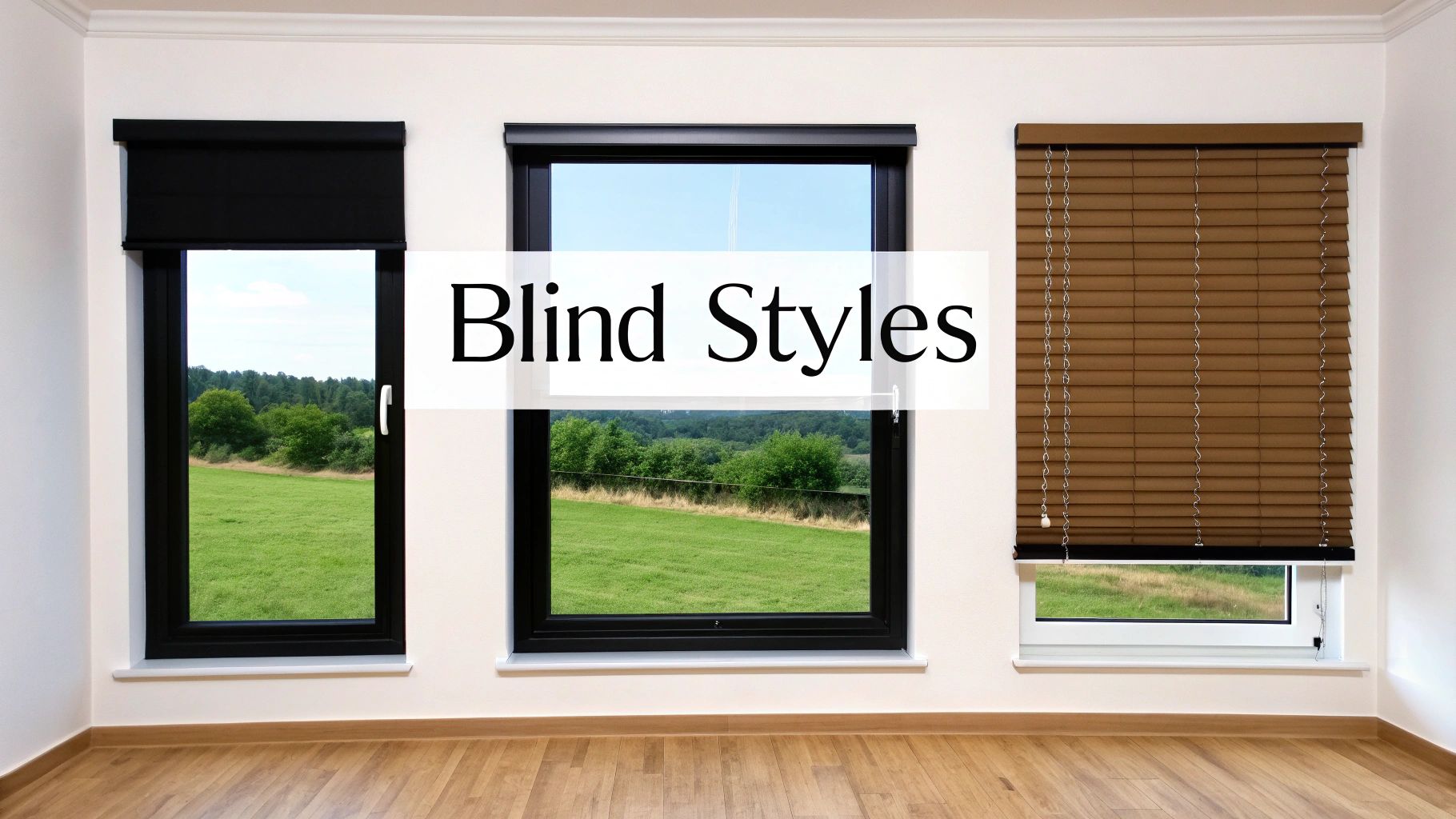
Now that you’ve got a handle on your privacy needs, let's dive into the styles that really deliver. Every type of blind has its own way of managing light and visibility, and figuring out how they work is the key to choosing wisely. From a solid sheet of fabric to cleverly tilting slats, the design makes all the difference.
This focus on practical, stylish window dressings is nothing new. For years, there's been a clear trend in UK homes moving towards blinds, mostly because our towns and cities are getting busier. By 2024, blinds were pulling in almost two-thirds of the revenue in the UK's window treatment market, with roller and Venetian styles easily being the most popular. They just have that perfect mix of modern looks and versatile privacy, a fact you can explore in more detail through market research.
So, let's break down the most effective options for keeping your home your own private sanctuary.
Roller Blinds: The Unbroken Shield
When you need straightforward, no-fuss privacy, roller blinds are the undisputed champions. They’re simply a single piece of fabric that rolls up or down, creating a solid, unbroken barrier when closed. It’s this simple design that makes them one of the best blinds for privacy, particularly if you go for a blackout or dimout fabric.
The upside: You get total coverage with no slats or gaps for prying eyes or light to sneak through. They’re also incredibly versatile, coming in a massive range of colours and patterns.
The downside: It’s an all-or-nothing deal. To let in any light, you have to roll the blind up, which means sacrificing your privacy.
For bedrooms or bathrooms where you absolutely cannot compromise on privacy, a blackout roller blind is an unbeatable choice. If you're curious about how they also boost your home's insulation, take a look at our guide on thermal blackout roller blinds for home comfort.
Venetian Blinds: The Art of Adjustment
Venetian blinds offer a far more subtle touch. Their horizontal slats can be tilted to just the right angle, letting you find that perfect balance between natural light and privacy. You can angle them upwards to bounce sunlight off the ceiling, filling the room with light without giving passers-by a clear view inside.
The upside: The control over light and privacy is second to none. You can tweak the slats throughout the day as the sun moves, all without having to open the blind itself.
The downside: Even when fully closed, tiny slivers of light can get through the cord holes and between the slats, so they won't give you a true blackout effect.
Venetian blinds are a fantastic solution for living rooms or home offices that face the street. They help you keep the space feeling bright and airy while making sure the world outside can’t see straight in.
Roman Blinds: Soft and Secluded
Roman blinds beautifully merge the soft, luxurious feel of curtains with the clean, simple function of a blind. They’re made from a single piece of fabric that neatly folds into elegant pleats as you raise it. When lowered, the fabric lies flat, creating a solid screen just like a roller blind.
The upside: They offer fantastic privacy when closed, especially if you add a blackout lining. The fabric also brings a real sense of warmth and sophistication to a room.
The downside: Much like roller blinds, they’re either up or down, which means less flexibility than you’d get from a Venetian style.
Day and Night Blinds: The Ultimate Hybrid
Day and Night blinds (sometimes called zebra blinds) are a seriously clever piece of engineering. They’re built with two layers of fabric that have alternating stripes of opaque and sheer material. By adjusting the blind, you can line these stripes up in different ways.
It works like this: line up the opaque stripes on both layers, and you create a solid barrier for complete night-time privacy. Shift them so the sheer stripes are exposed, and you get soft, filtered daylight while still keeping your room hidden from view. This dual-function design makes them one of the most versatile and best blinds for privacy on the market today.
Choosing the Right Material for Total Privacy
Picking the right style of blind is a great start, but it's the material that truly does the heavy lifting when it comes to privacy. Think of it as the core of your defence against prying eyes. Whether it's a tightly woven fabric or a solid plank of wood, the material is what transforms your window into a proper sanctuary.
Fabric weaves are a bit like a sieve. A loose, open weave will let in more light and, naturally, more of a view from the outside. In contrast, a dense, tight weave creates a much more solid barrier. This is the simple principle behind standard, dimout, and blackout fabrics – each offering a different level of seclusion.
Getting to Grips with Fabric Opacity
Fabric blinds, particularly the ever-popular Roller and Roman styles, come in a range of opacities. This term just refers to how much light (and visibility) can pass through. Nailing this choice is crucial for getting the right level of privacy for each room in your home.
Standard Fabrics: These are generally quite translucent. They're fantastic for letting natural light flood a room while blurring the direct view from outside during the day. The catch? At night, with your lights on, they can easily show silhouettes.
Dimout Fabrics: A significant step up, dimout materials have a much denser weave. They block out most of the light and obscure almost all visibility, day or night. This makes them a brilliant all-rounder for living rooms and home offices.
Blackout Fabrics: This is the gold standard for privacy. Blackout materials have a special coating or an integrated lining that blocks 100% of light. Absolutely nothing can be seen through them, making them the undeniable choice for bedrooms and bathrooms.
The Unbeatable Privacy of Hard Materials
Moving away from fabrics, solid materials like wood, faux wood, and aluminium offer a completely different kind of privacy – one that’s absolute. When you tilt the slats of these blinds fully closed, they form an impenetrable screen.
These are the materials you'll find in Venetian blinds, which give you that fantastic dual control: adjustable light and privacy during the day, and complete, solid seclusion when you need it. Their rigidity means you never have to worry about shadows or silhouettes, giving you total peace of mind.
The real beauty of hard materials is their complete opacity. When closed, they don't just filter the view; they block it entirely, creating a solid wall between you and the outside world.
To make the choice a little clearer, it helps to see how the different materials stack up against each other.
Material Comparison for Privacy Blinds
Here’s a comparative look at different blind materials, focusing on how they perform in terms of privacy, durability, and suitability for different areas of your home.
Material | Privacy Level | Durability | Moisture Resistance | Best Suited For |
|---|---|---|---|---|
Blackout Fabric | Maximum | High | Varies | Bedrooms, Nurseries |
Dimout Fabric | High | High | Varies | Living Rooms, Offices |
Wood | Maximum (when closed) | Very High | Low | Living Rooms, Bedrooms |
Faux Wood | Maximum (when closed) | Very High | High | Bathrooms, Kitchens |
Aluminium | Maximum (when closed) | High | High | Kitchens, Offices |
As the table shows, the function of the room is your best guide. For a steamy bathroom, moisture-resistant faux wood is the obvious winner. For a cosy living room, the natural warmth of real wood is hard to beat. By matching the material to the room’s specific demands, you’ll get flawless privacy that lasts for years.
Room by Room: Finding the Perfect Privacy Blinds
Choosing the right blinds for privacy isn't a one-size-fits-all job. What works wonders in your living room could be a disaster in the bathroom. Let's walk through the main spaces in your home and figure out the best match for each, looking at how the room is used and what level of privacy it really needs.
Thinking on a room-by-room basis helps you create a home that feels cohesive but is still perfectly kitted out for each space's unique challenges, from kitchen humidity to the need for absolute darkness in the bedroom.
This handy decision tree gives you a quick visual guide for matching a room to its best privacy solution.
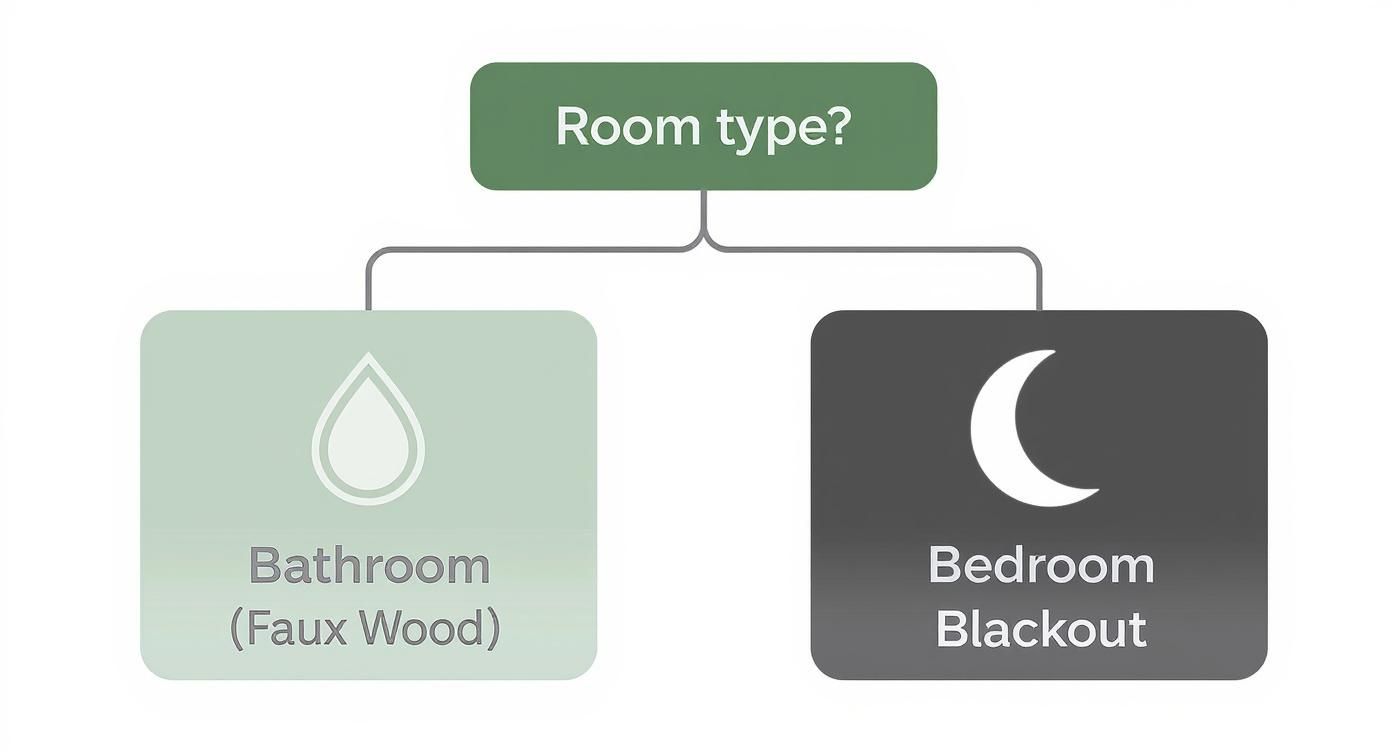
As the infographic shows, the function of a room is what really drives your choice. Moisture resistance and total light control are often the two biggest factors to consider.
Living and Dining Rooms
These are the social hubs of your home. You want to create a warm, welcoming atmosphere with plenty of natural light, but you also need to stop people on the street from having a clear view inside.
Versatility is the key here. Venetian blinds are a brilliant option because you can angle the slats to bounce light up onto the ceiling, brightening the room while still blocking the direct line of sight from outside. Day and Night blinds are another incredibly flexible choice, allowing you to easily switch between sheer and opaque fabric panels whenever you need to.
Top Picks: Venetian, Day and Night, or lined Roman blinds.
Key Goal: To strike the perfect balance between letting light in and maintaining privacy, day and night.
Bedroom Sanctuaries
When it comes to the bedroom, privacy is everything. The main goal is complete seclusion and the ability to block out light for a truly restful sleep. This is where blackout fabrics really come into their own.
A blackout Roller blind is the ultimate choice for this, creating a solid fabric barrier that blocks 100% of light and visibility. If you're after a softer look, a Roman blind with a blackout lining gives you that same top-tier performance but with a cosier, more luxurious feel.
Your bedroom needs a blind that creates a total barrier. This doesn't just guarantee privacy—it also blocks out annoying streetlights and car headlamps, which is a massive help for getting better quality sleep.
Bathroom and Kitchen Heroes
Privacy in bathrooms and kitchens comes with an added twist: moisture. Steam from a hot shower or bubbling pans can easily warp materials like real wood, so you need something durable and water-resistant.
The undisputed champion for these spaces is the faux wood Venetian blind. Made from a tough PVC, they are completely waterproof, a doddle to wipe clean, and won't bend or warp when things get steamy. They give you the same fantastic control over light and privacy as real wood but are built to handle the heat (and the wet). Aluminium Venetians are another great, hard-wearing option.
For more ideas, have a look at our guide on moisture-resistant blinds for bathrooms.
Getting Clever with Modern Privacy Features
While materials and styles are the foundation of a good blind, some of the most exciting developments are in the features they offer. We've moved far beyond the simple pull-cord. Today's clever mechanisms and smart tech give you a level of control over your home's privacy that was once unthinkable.
One of the best examples is the top-down, bottom-up feature. It’s a game-changer, especially for ground-floor rooms. Think about your living room window that faces the street – you want the natural light, but you don't want every passer-by looking in.
With this system, you can lower the blind from the top to let daylight flood the room while keeping the bottom half covered for complete privacy. It's a simple, elegant solution to a very common problem, giving you the best of both worlds.
The Arrival of Smart Blinds
Smart home tech has well and truly made its way to our windows, and it's having a huge impact on both privacy and security. Smart blinds connect to your phone or smart speaker, letting you control them with an app, your voice, or even on a set schedule.
Imagine setting your blinds to close automatically every evening as the sun sets, so you never have to worry about forgetting. Or, if you're on holiday, you can open and close them remotely to make it look like someone’s home. It’s a brilliant little security boost.
This kind of automation is a big deal. The wider European window coverings market, which includes the UK, is projected to grow by 7.2% each year until 2035, and smart home integration is a massive reason why. You can read more about this growing market trend on transparencymarketresearch.com.
This fusion of technology and practicality is changing how we view blinds. They aren't just decorative fixtures anymore; they're an active part of managing your home's atmosphere and security.
If you’re keen on innovative light control, our guide on what Day and Night blinds are is worth a read. These newer options are definitely pointing the way to the future of finding the best blinds for privacy.
Your Privacy Blind Questions Answered
Choosing the right blinds for privacy can feel like the last piece of the puzzle. It's only natural to have a few questions before you commit. We've gathered some of the most common queries we hear from customers to help you make your final decision with confidence.
How Can I Block Out My Neighbour's Lights at Night?
If you're dealing with a pesky security light or bright streetlamps, you need something that offers serious light-blocking power. For this, blackout roller or Roman blinds are your go-to solution.
Because they're made from a single, solid piece of fabric that fits snugly within the window frame, they create an impressive barrier against any unwanted light, turning your bedroom into a proper sanctuary.
Are Venetian Blinds a Good Choice for Privacy?
Venetian blinds are absolutely brilliant for daytime privacy. You can simply tilt the slats to block the view from the outside while still letting plenty of natural light filter in, keeping your room bright and welcoming.
It's worth remembering, though, that the tiny gaps between the slats and around the cords mean they won't give you the complete darkness of a blackout blind. They're a versatile choice, but not a total blackout option.
Venetian blinds are a fantastic compromise for living rooms or home offices. They give you that open, airy feel during the day without making you feel like you're on display.
What’s the Most Budget-Friendly Option for Privacy?
Looking for excellent privacy without breaking the bank? A standard roller blind in a blackout or dimout fabric is hard to beat for sheer value.
This straightforward option delivers brilliant light control and seclusion at a really accessible price point. Its simple design and effective material make it a popular and practical choice for almost any room in the house.
How Do I Measure My Windows for a Perfect Fit?
Getting your measurements spot-on is the key to maximising privacy and eliminating those annoying slivers of light around the edges. First, you'll need to decide whether you want the blind inside or outside the window opening.
Recess Fit: This is for when you want the blind to sit neatly inside the window frame. Just measure the width and the drop in three different places, and use the smallest of those measurements.
Exact Fit: This is for when the blind will hang outside the recess, overlapping the wall. You'll need to decide how much overlap you want on each side – we usually suggest at least 70mm – and measure the final width and drop you require.
At Blindsmart, our friendly team is always on hand to help you find the perfect fit. Visit our local showroom or explore our made-to-measure blinds online at https://www.blindsmart-im.co.uk.
Comments