
8 Inspiring Window Dressing Ideas for Bay Windows in 2025
- Blindsmart im
- Oct 22
- 15 min read

Bay windows are a stunning architectural feature, flooding our homes with natural light and offering panoramic views. Yet, dressing them can feel like a complex puzzle. The unique angles and expansive glass demand a thoughtful approach, one that masterfully balances style, privacy, and light control without compromising the window's inherent charm. A generic, off-the-shelf solution often fails to do justice to this elegant space, leading to awkward gaps, poor functionality, and a missed design opportunity.
This guide moves beyond the basics, offering a curated collection of practical and sophisticated window dressing ideas for bay windows. We will explore eight distinct solutions tailored specifically for the challenges and beauty of these architectural highlights. From the clean lines of custom-fitted Roman shades and the classic appeal of plantation shutters to the soft elegance of continuous curtain rods with flowing drapes, each suggestion provides actionable insights for implementation.
You will discover how to layer treatments effectively, integrate dressings with a window seat, and choose materials that enhance your home’s aesthetic. We will delve into specific options like cellular shades and decorative valances, providing the practical details you need. This roundup is organised to help you transform your bay window from a challenging area into a captivating focal point for any room in your UK home.
1. Custom Fitted Roman Shades
Roman shades offer a sophisticated and tailored solution for dressing bay windows. Unlike curtains that hang vertically, these fabric window coverings stack up in neat, horizontal folds when raised and lie perfectly flat when lowered. For a bay window's unique multi-panelled structure, custom-fitted Roman shades are designed to fit each individual window section, creating a seamless and integrated appearance that highlights the architectural charm of the bay.
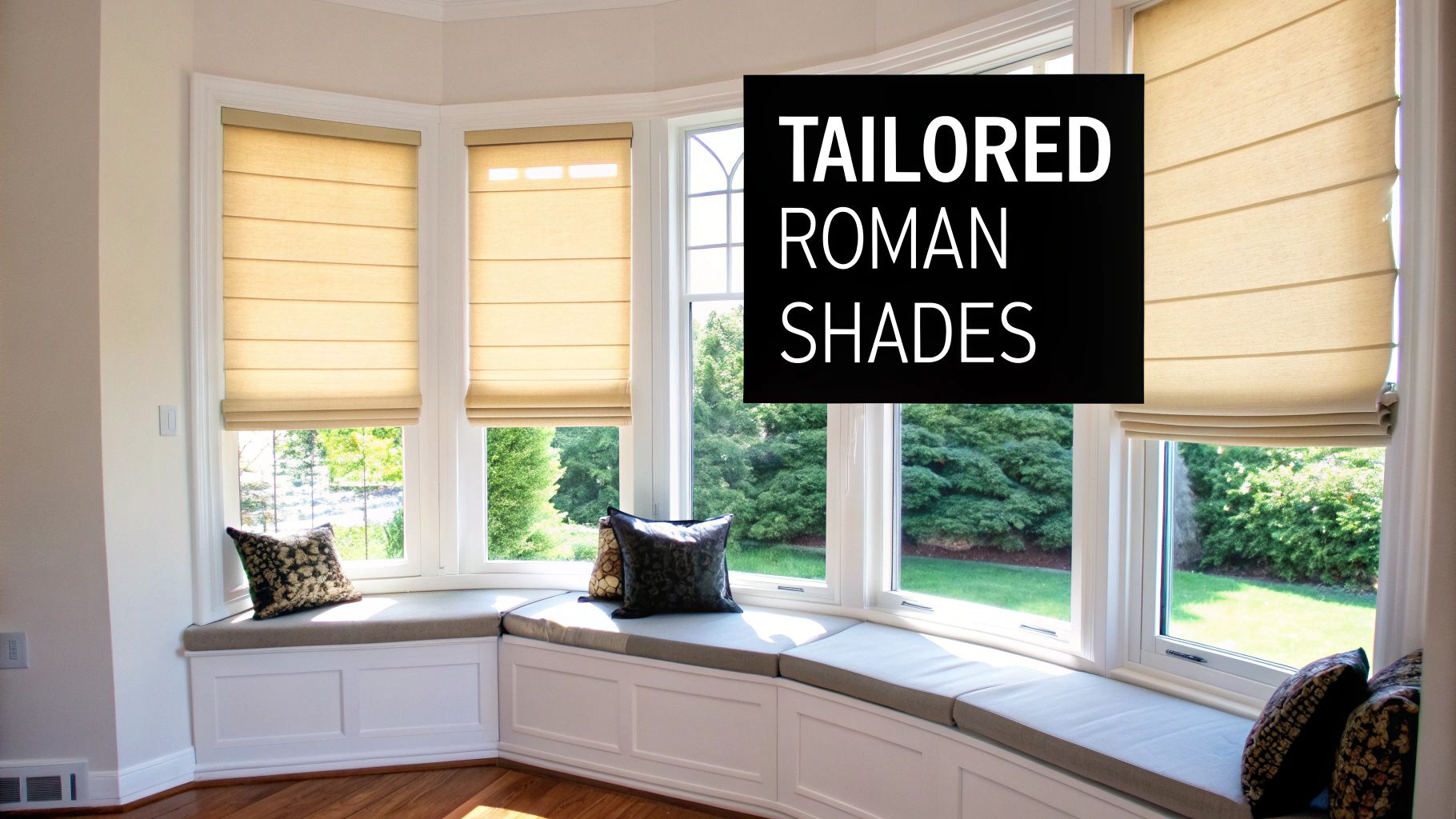
This approach is one of the most versatile window dressing ideas for bay windows because it balances softness with structure. The vast selection of fabrics, from light-filtering linens to complete blackout materials, allows for precise control over light and privacy. This makes them suitable for nearly any room, from a bright kitchen nook to a serene bedroom sanctuary.
When to Choose This Style
This option is ideal when you want to maintain a clean, uncluttered look without sacrificing the warmth of fabric. Custom Roman shades are perfect for bay windows with built-in seating, as they don't have excess material that would bunch up on the window seat. They are also a superb choice for modern and traditional interiors alike, with the fabric choice dictating the final aesthetic.
Implementation Tips
To achieve a professional finish, consider these practical steps:
Measure Meticulously: Measure each window pane within the bay separately for width and height. Even slight variations in the frame can affect the fit, so precision is key.
Mounting Matters: For a clean, built-in look, mount the shades inside the window recess. If your goal is to maximise light blockage or cover less-than-perfect window frames, an outside mount is more effective.
Fabric and Function: In a living room, a patterned linen can introduce colour and texture. For bedrooms, select a fabric with a blackout lining to ensure a dark, restful environment. In kitchens or bathrooms, opt for moisture-resistant fabrics for durability.
Consider Automation: For high or hard-to-reach bay windows, motorised Roman shades offer convenient operation at the touch of a button. This is a practical luxury that enhances functionality.
2. Continuous Curtain Rods with Flowing Drapes
This approach uses a custom-curved or flexible curtain rod that traces the entire contour of the bay, allowing drapery to flow seamlessly across all window sections. Treating the bay as a single, cohesive unit creates a dramatic and elegant effect, enhancing its architectural grandeur rather than breaking it into separate panels. Floor-length drapes are the classic choice here, adding softness, height, and a significant visual impact.
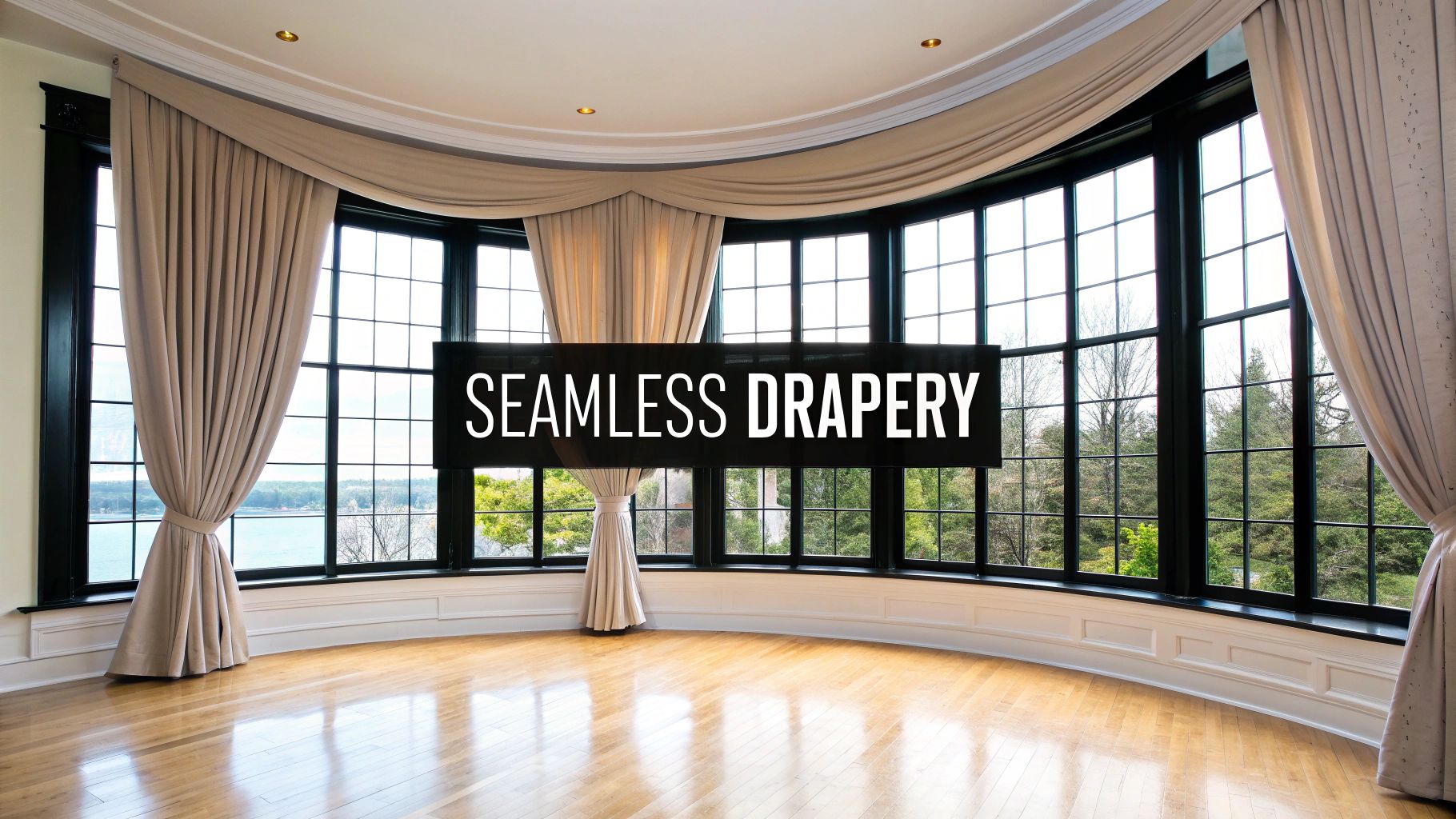
As one of the most graceful window dressing ideas for bay windows, continuous drapes offer a sense of unity and luxury. This style works beautifully in both traditional and contemporary settings, from a formal dining room with floor-to-ceiling silk curtains to a master bedroom featuring layered sheers and blackout drapes. The single, sweeping line of fabric draws the eye and makes the entire space feel more deliberate and polished.
When to Choose This Style
This is the ideal solution when your goal is to create a soft, luxurious, and unified look that makes a statement. It is particularly effective in rooms with high ceilings where floor-length curtains can maximise the sense of height. This style is also perfect for framing a beautiful view, as the curtains can be pulled back completely to either side of the bay, leaving the windows unobstructed.
Implementation Tips
To ensure a flawless and functional installation, follow these key steps:
Professional Installation: A continuous rod must be properly supported, especially with heavier fabrics. Hiring a professional ensures the rod is securely mounted and precisely follows the bay's angles.
Easy-Glide Curtains: Choose curtains with grommets or rings. These styles slide much more easily along a curved track than tab-top or rod-pocket curtains, which can snag at the corners.
Layer for Versatility: For ultimate light and privacy control, layer a sheer curtain on a separate track behind a heavier main drape. This allows you to enjoy filtered daylight while maintaining privacy.
Frame the View: Use decorative tie-backs to hold the curtains open during the day. This not only floods the room with light but also elegantly frames the window and its view, turning it into a focal point.
3. Plantation Shutters
Plantation shutters are solid, architectural window coverings featuring wide, adjustable louvres. Custom-built to fit each angled section of a bay window, they create a cohesive and permanent feature that enhances the window's structure. This treatment provides a timeless, classic aesthetic that integrates seamlessly with virtually any interior design scheme.
As one of the most durable and functional window dressing ideas for bay windows, shutters offer exceptional control over light and privacy. The tilting louvres allow for precise adjustments, from flooding a room with sunlight to creating near-complete darkness. Their solid construction also provides an added layer of insulation, helping to regulate room temperature and reduce energy bills.
When to Choose This Style
This option is perfect for those seeking a long-lasting, low-maintenance solution that becomes part of the home's architecture. Plantation shutters are ideal for living rooms, kitchens, and bedrooms where light control and privacy are paramount. They are especially effective in traditional, coastal, or modern farmhouse interiors, adding a touch of sophisticated character. Joanna Gaines, for instance, frequently uses them in Magnolia Home designs to achieve a clean, classic look.
Implementation Tips
To ensure a flawless installation, consider the following practical advice:
Professional Measurement is Key: The precise angles of a bay window make accurate measurements critical. A professional installer can guarantee the custom-built shutters fit perfectly within each frame.
Material Matters: Opt for faux wood or PVC shutters in high-moisture areas like kitchens and bathrooms to prevent warping. For other rooms, explore the timeless beauty of wooden shutters which can be stained or painted.
Match Your Trim: For a seamless, built-in appearance, choose a shutter colour that matches your window trim. A crisp white or soft cream often works best to create an elegant, cohesive effect.
Consider Style Variations: Café-style shutters cover only the bottom half of the window, maintaining privacy while allowing maximum light in from the top. For ultimate flexibility, tier-on-tier shutters allow you to open the top and bottom sections independently.
Tilt Rod Options: A hidden tilt rod offers a more modern, streamlined look, while a traditional centre tilt rod provides a more classic aesthetic.
4. Layered Treatments with Sheers and Side Panels
Layering window treatments offers a highly functional and aesthetically rich solution for bay windows. This sophisticated approach combines a functional inner layer, such as sheer curtains or shades, with decorative side panels. The inner layer is fitted to each individual window section to manage light and provide daytime privacy, while the stationary fabric panels are installed on the outer edges of the bay, framing the entire architectural feature to add colour, texture, and visual softness.
This method is one of the most customisable window dressing ideas for bay windows, providing unparalleled flexibility. You can enjoy diffused natural light through the sheers during the day and rely on the decorative impact of the side panels to anchor the room's design scheme. This combination creates a sense of depth and elegance that a single treatment often cannot achieve.
When to Choose This Style
This layered look is perfect when you desire both practicality and a luxurious, designer finish. It is particularly effective in living rooms and master bedrooms where you want to control light and privacy throughout the day without sacrificing style. It also works beautifully to frame a scenic view, drawing the eye outwards while adding a soft, decorative touch to the interior.
Implementation Tips
To execute this layered style effectively, follow these key steps:
Prioritise the Base Layer: Install the functional inner layer first. Whether you choose sheers, cellular shades, or solar shades, ensure they are measured for each window pane and are easily operable for daily use.
Frame the Bay: Mount the decorative side panels high and wide on the wall, outside the bay's structure. This technique creates the illusion of a larger, taller window and ensures the panels don't obstruct the view.
Coordinate Materials: Select a neutral, versatile fabric for your inner layer, such as an off-white sheer. This allows you to easily update the decorative side panels in the future. For the side panels, choose a fabric that complements your room's decor, like navy velvet for drama or a patterned linen for a touch of character.
Use Elegant Hardware: Utilise a custom-curved or angled curtain rod that follows the shape of the bay for the sheers. For the side panels, use two separate straight rods on the flanking walls. Decorative holdbacks can be used to keep the side panels neatly in place.
5. Cellular (Honeycomb) Shades
Cellular shades, often called honeycomb shades, are celebrated for their unique construction that offers superior insulation. They feature a series of honeycomb-shaped cells that trap air, creating a thermal barrier that helps regulate room temperature. For a bay window, which often has a large glass surface area, this energy efficiency is a significant advantage. Custom-fitted cellular shades can be mounted on each individual window panel, providing a sleek, contemporary look that is highly functional.
This style is one of the most practical window dressing ideas for bay windows, especially for energy-conscious homeowners. The clean lines and minimal stack when raised make them an unobtrusive choice, preserving the view and architectural detail. They are available in a vast range of colours and opacities, from sheer to complete blackout, making them adaptable to any room's requirements.
When to Choose This Style
This option is perfect if your primary goals are energy efficiency, a modern aesthetic, and versatile light control. Cellular shades are ideal for bay windows in bedrooms or nurseries, where blackout options can create a perfect environment for sleep. They are also excellent for home offices where light-filtering fabrics can reduce screen glare without plunging the room into darkness. The top-down/bottom-up feature offers unparalleled privacy control, making them suitable for street-facing rooms.
Implementation Tips
To get the most out of cellular shades for your bay window, follow these guidelines:
Prioritise Insulation: For maximum thermal performance in very hot or cold climates, choose double-cell shades. They offer an extra layer of trapped air, significantly boosting insulation and helping to reduce utility bills.
Embrace Flexibility: Opt for the top-down/bottom-up configuration. This allows you to lower the shade from the top to let in natural light while keeping the bottom half covered for privacy, a perfect solution for ground-floor bay windows.
Fabric Functionality: Select a light-filtering fabric for living areas to maintain a bright, airy feel. In bedrooms, a blackout fabric is essential for light-sensitive sleepers. Ensure the colour is consistent across all three sections for a cohesive look.
Consider Automation: For large or hard-to-reach bay windows, motorised cellular shades are a game-changer. They allow for easy adjustment with a remote control or smart home integration, adding a touch of modern convenience.
6. Window Seat Integrated Treatments
This design approach treats the bay window and its built-in window seat as a single, unified feature. The goal is to choose window dressings that complement and enhance the usability of the seating area, rather than obstructing it. Solutions are specifically selected to maintain the functionality of the nook, ensuring it remains a comfortable and inviting space for reading or relaxation while still providing essential privacy and light control.
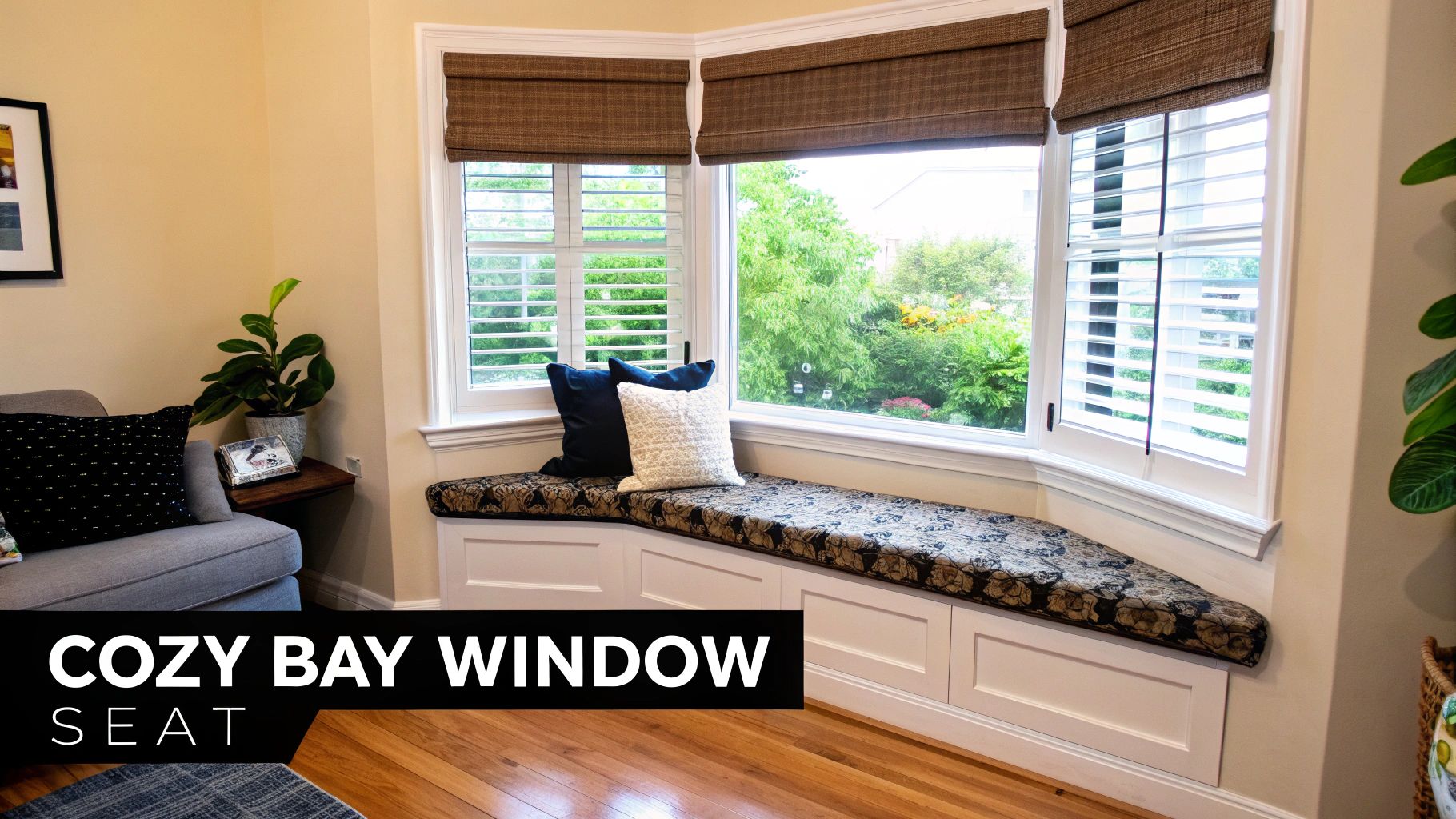
By integrating the treatments with the seat, you create a cohesive and purposeful design. This is one of the most practical window dressing ideas for bay windows with seating, as it avoids issues like curtains pooling on the bench or blinds getting in the way. Whether it's short café curtains for a touch of charm or sleek Roman shades that disappear when raised, the focus is on a seamless look. Considering the right combination of blinds and curtains can further elevate the space; for more insights, explore these options for bay window blinds.
When to Choose This Style
This style is a necessity for any bay window that features a built-in seat. It is perfect for creating cosy reading nooks, functional kitchen breakfast areas, or charming spots in a child's bedroom. If your priority is to maximise the utility of the window seat while ensuring the window treatments are both stylish and practical, this integrated approach is the ideal solution.
Implementation Tips
To perfectly blend your window treatments with your seating area, follow these key steps:
Coordinate Fabrics: Create a harmonious look by coordinating the fabric of your window treatments with the seat cushions and throw pillows. Use complementary colours or patterns to tie the entire nook together.
Measure for Function: When considering curtains or drapes, measure from the curtain rod down to just above the seat cushion. This ensures they hang correctly without bunching up on the seating surface.
Prioritise Inside Mounts: Install Roman shades or blinds inside the window recess. This prevents the treatment from protruding over the seat, preserving every inch of valuable space and creating a clean, built-in appearance.
Frame the View: Use stationary curtain panels on either side of the bay window. This frames the entire nook beautifully, adding softness and colour without covering the glass or interfering with the view.
Consider Café Curtains: For a casual, whimsical feel, especially in kitchens or children's rooms, install café curtains on the lower half of the windows. A simple tension rod allows for easy removal and washing.
7. Vertical Blinds with Fabric Vanes
Vertical blinds have been reimagined with soft fabric vanes, transforming a once purely functional option into an elegant and contemporary solution. Suspended from a track system, these fabric slats traverse the window's width and can be angled for precise light control. For bay windows, specially designed flexible track systems curve seamlessly around the angles, allowing a single, unified treatment to span all sections of the bay.
This modern take combines the light-filtering qualities and operational simplicity of traditional blinds with the softness and textural appeal of fabric. This makes them one of the most practical window dressing ideas for bay windows in contemporary spaces, especially those with large expanses of glass or sliding doors incorporated into the bay structure. The continuous flow of the fabric vanes creates a sleek, uncluttered look that enhances height and space.
When to Choose This Style
This style is an excellent choice for modern and transitional interiors where clean lines and functionality are paramount. They are particularly effective for bay windows that include a patio or French door, as the blinds can be stacked neatly to one side, allowing unobstructed access. Their superior light control also makes them ideal for home offices or living rooms where managing screen glare is important.
Implementation Tips
To ensure a stylish and functional installation, consider the following advice:
Prioritise Fabric: Choose fabric vanes over traditional vinyl for a softer, more sophisticated residential feel. Textured neutrals or sheer fabrics can add depth and warmth.
Professional Installation is Key: The curved track required for a bay window must be installed perfectly to ensure the blinds glide smoothly. Professional fitting is highly recommended for this.
Wider Vanes for a Modern Look: Opt for wider vanes (e.g., 3.5 inches) as they offer a more contemporary aesthetic and provide a clearer view when open compared to narrower alternatives.
Plan Your Stack: Decide which side the vanes will stack to when fully open. Choose the side that will least interfere with furniture, traffic flow, and your view.
Consider Automation: For large or hard-to-reach bay windows, a motorised system provides effortless control over light and privacy, adding a touch of modern convenience. To explore the options available, you can learn more about vertical blinds on Blindsmart.
8. Decorative Valances and Top Treatments
Valances and cornices are decorative top treatments that add a finishing touch of elegance and architectural interest to a bay window. Installed above the window frames, they serve to conceal curtain rods or blind headers while beautifully framing the view. This approach can be used alone for a minimalist look or paired with other treatments like blinds or sheers for a more layered, sophisticated design.
Custom-angled valances are specifically designed to follow the unique contour of a bay window, emphasising its architectural form rather than hiding it. From structured, upholstered cornice boards to soft, draped fabric swags, these top treatments are brilliant window dressing ideas for bay windows as they introduce colour, pattern, and texture without obstructing the light or view. They are particularly effective in traditional, country, or formal interiors.
When to Choose This Style
This option is perfect when you want to add a decorative flourish, create an illusion of height, or tie the window treatment into the room's overall colour scheme. A valance or cornice is an excellent choice for formal living or dining rooms where an element of grandeur is desired. They also work well in kitchens over a sink, adding softness without long drapes that could get in the way.
Implementation Tips
To ensure your top treatment enhances your bay window perfectly, consider these tips:
Custom Fit is Crucial: For a professional finish, the valance or cornice must be custom-made to fit the precise angles of your bay. A single, continuous piece that turns the corners smoothly looks far more polished than separate sections.
Proportionality is Key: The depth of the valance should be proportional to the window's height, typically around one-fifth to one-sixth of the total height. Mounting it 10-20 cm above the frame makes the window appear taller.
Style and Structure: A structured cornice board offers a clean, architectural look suitable for transitional or formal spaces. Soft fabric valances, like swags or Kingston styles, lend a more traditional and romantic feel.
Fabric Coordination: Use the valance fabric to echo an accent colour from your furniture, rugs, or wallpaper. Adding a contrasting trim or decorative banding to a solid-coloured valance can provide sharp definition and visual interest.
8-Option Bay Window Treatments Comparison
Option | Implementation Complexity 🔄 | Resource Requirements ⚡ | Expected Outcomes ⭐📊 | Ideal Use Cases | Key Advantages 💡 |
|---|---|---|---|---|---|
Custom Fitted Roman Shades | 🔄🔄🔄 — Professional measurement & tailored installation | ⚡ Cost: $200–$800+/panel; varied fabrics; optional motorization | ⭐⭐⭐⭐ — Tailored aesthetic, good light control & insulation | Traditional/transitional rooms, bedrooms, window seats | 💡 Clean, space‑efficient; versatile fabrics; good insulation |
Continuous Curtain Rods with Flowing Drapes | 🔄🔄🔄🔄 — Custom curved rods; heavier installation | ⚡ Rods $150–$500; drapes $200–$1,000+; high fabric yardage | ⭐⭐⭐⭐ — Dramatic, cohesive sweep; full privacy; high visual impact | Large bay windows, formal spaces, rooms seeking drama | 💡 Unified look; softens angles; one‑motion operation |
Plantation Shutters | 🔄🔄🔄🔄 — Custom build, precise install; permanent fixture | ⚡ Cost: $1,500–$5,000+ per bay; wood/faux/composite materials | ⭐⭐⭐⭐⭐ — Durable, excellent light control, strong insulation & resale value | Long‑term homeowners, all styles (esp. traditional/coastal) | 💡 Long‑lasting; low maintenance; superior light/energy control |
Layered Treatments (Sheers + Side Panels) | 🔄🔄🔄 — Multiple layers & mounts; coordinated install | ⚡ Cost: $300–$1,500+; multiple tracks/rods & fabrics | ⭐⭐⭐⭐ — Maximum versatility; layered depth; adjustable privacy | Flexible living spaces, master bedrooms, formal living/dining | 💡 Flexible light control; easy seasonal updates; decorative depth |
Cellular (Honeycomb) Shades | 🔄🔄 — Straightforward custom fit; moderate install | ⚡ Cost: $150–$600/section; single/double/triple‑cell options; motorization available | ⭐⭐⭐⭐ — Superior energy efficiency; clean modern look; precise control | Energy‑conscious homes, contemporary interiors, nurseries | 💡 Excellent insulation; top‑down/bottom‑up; cordless safety |
Window Seat Integrated Treatments | 🔄🔄🔄 — Coordinated with seat depth; tailored solutions needed | ⚡ Cost: $150–$800+; possible custom hardware & fabric coordination | ⭐⭐⭐ — Enhances usability and coziness; may limit full privacy | Homes with built‑in window seats, reading nooks, kids’ rooms | 💡 Preserves seat function; cohesive nook design; prevents interference |
Vertical Blinds with Fabric Vanes | 🔄🔄 — Moderate install; curved track required for bays | ⚡ Cost: $200–$800; fabric vanes and traverse track; optional motorization | ⭐⭐⭐ — Good for wide spans; precise light angle control; lower insulation | Wide bay windows, sliding door combos, contemporary spaces | 💡 Compact stacking; smooth traverse; cost‑effective for large spans |
Decorative Valances & Top Treatments | 🔄🔄 — Custom angles but less mechanical complexity | ⚡ Cost: $150–$800+; cornices/soft valances; professional mounting recommended | ⭐⭐⭐ — Adds architectural character; conceals hardware; modest light effect | Traditional, country, transitional interiors; formal rooms | 💡 Instant finish; frames window; easy seasonal refresh |
Choosing Your Perfect Bay Window Solution
Navigating the world of window dressing ideas for bay windows can feel complex, but as we have explored, the possibilities are as exciting as they are varied. Your bay window is not just a source of light; it is a significant architectural feature that deserves a treatment to match its prominence. By understanding the distinct advantages of each solution, you can transform this unique space from a challenging puzzle into a stunning focal point.
Key Takeaways for Dressing Your Bay
We have journeyed through a curated selection of eight distinct approaches, each offering a unique blend of style and practicality. Let’s distil the core principles to guide your final decision:
Honour the Architecture: The most successful treatments work with, not against, the angled structure of your bay. Whether it is the precision of custom-fitted Roman shades or the clean lines of plantation shutters, the goal is to enhance the window's natural form.
Balance Form and Function: Your lifestyle dictates the best choice. Consider your need for privacy, light control, and insulation. Cellular shades offer superb thermal efficiency, while layered treatments provide unparalleled flexibility, allowing you to adjust for light and privacy throughout the day.
Customisation is Key: Off-the-shelf solutions rarely do a bay window justice. A made-to-measure approach, particularly with continuous curtain rods or integrated window seat treatments, ensures a seamless, professional finish that elevates the entire room. Don't view customisation as a luxury but as a necessary investment for this type of window.
Actionable Next Steps
With this inspiration in hand, it is time to move from planning to action. The first, most critical step is to measure with precision. Accurately record the width and height of each individual window panel and note the angles at which they meet. This data is the foundation for any custom solution, from blinds to shutters.
Next, revisit the ideas that resonated most with your personal aesthetic and functional requirements. Gather fabric samples, compare material options, and visualise how each treatment will interact with your existing decor. Remember that the right window dressing does more than just cover a window; it completes the room's design narrative, adding colour, texture, and a sense of considered elegance. Ultimately, the perfect choice will not only solve practical issues like glare and privacy but will also bring you joy every time you enter the space.
Feeling inspired but need expert guidance to bring your vision to life? The team at Blindsmart on the Isle of Man specialises in crafting bespoke, made-to-measure solutions for even the most challenging bay windows. Visit our showroom or explore our offerings online to discover how we can create the perfect, professionally fitted window dressing for your home at Blindsmart.
Comments