
Finding the Best Blinds for Bay Windows in the UK
- Blindsmart im
- Oct 14
- 16 min read

Bay windows are a fantastic feature in any home, but dressing them can feel a bit tricky. The best blinds are usually styles that can be fitted neatly into each individual window pane. Think versatile Venetian blinds, elegant Roman blinds, or sleek, minimalist Roller blinds. This approach gives you a clean, custom-made look that perfectly follows the unique angles of the bay.
Why Bay Windows Deserve the Perfect Blinds
A bay window is more than just glass; it’s an architectural centrepiece. It floods your room with natural light and creates a wonderful sense of space. But their unique structure—whether you have an angled, box, or curved bay—poses a real challenge when it comes to finding the right window dressing.
Choosing the right blinds isn't just about looks. It’s a practical decision that affects light control, your privacy, and even how energy-efficient your home is. The aim is to celebrate the window's shape, not hide it away.
Unlike a standard flat window where one big blind does the job, a bay window needs a bit more thought. By treating each pane of glass as its own window, you get a seamless, sophisticated finish that complements the architecture. It also means you can adjust the light and privacy for each section independently, giving you total control throughout the day.
Finding Your Ideal Style
To get started, it helps to know the main contenders. Venetian blinds are brilliant for filtering light with precision, Roman blinds add a layer of soft, luxurious fabric, and Roller blinds offer a clean, contemporary look. Each one brings a different feel to the room, so your choice will really define the space's character.
Here in the UK, where bay windows are a classic feature in everything from Victorian terraces to modern builds, getting it right is key. In fact, over 40% of homeowners with bay windows now choose made-to-measure blinds over old-fashioned curtains, loving the tailored fit and modern appearance. Of these, Roman and vertical blinds are especially popular, making up nearly 35% of all bay window blind installations because of how well they work. You can take a closer look at the data on UK window covering trends to see how tastes are changing.
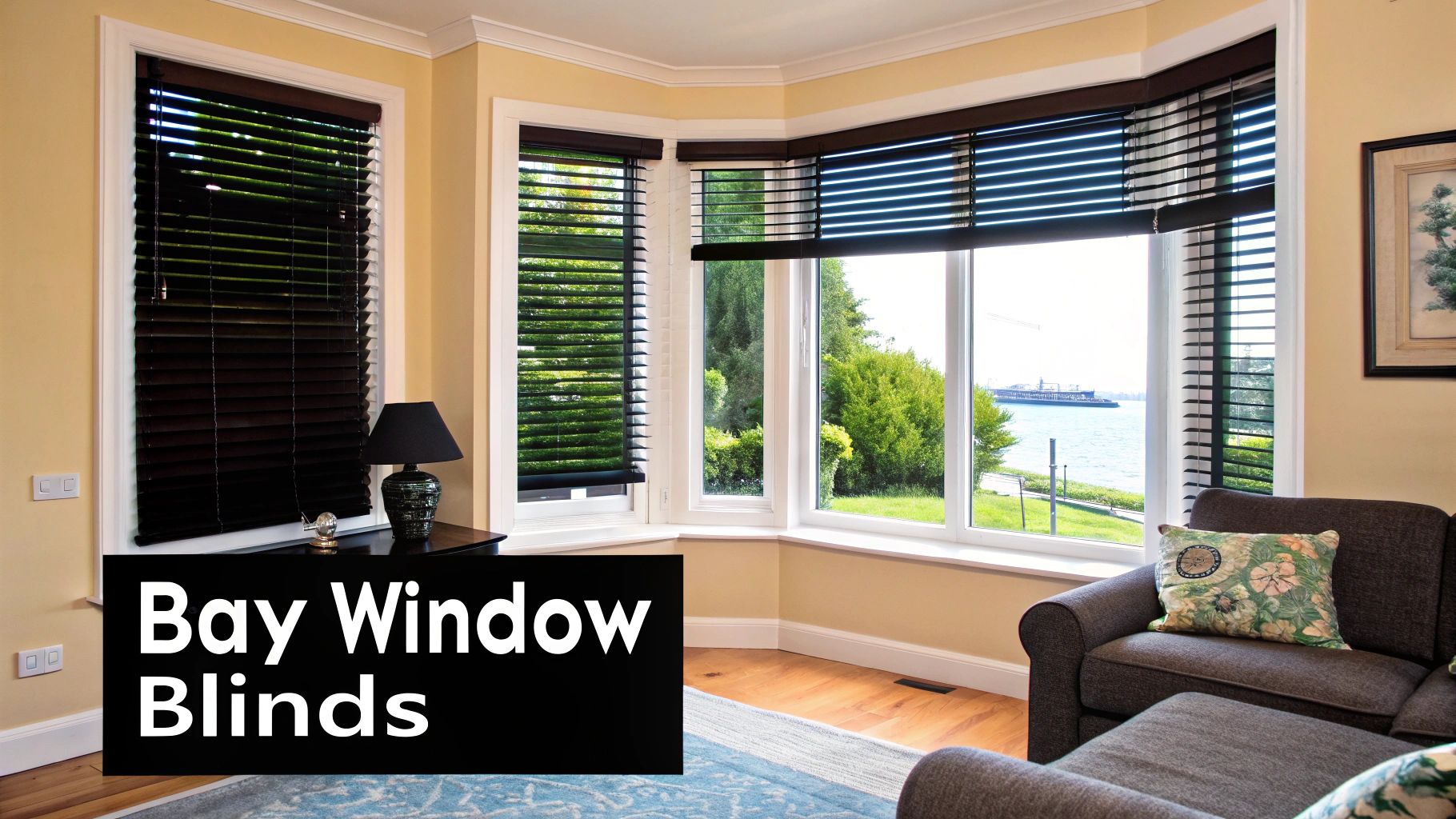
The secret is to stop thinking of your bay window as one single opening. Instead, see it as a collection of individual windows working together. The best blinds will respect this structure, creating a finish that’s both beautiful and practical for each part of the whole.
To help narrow down the options, I've put together a simple comparison table. It gives a quick overview of the most popular styles, so you can see which one might be the best fit for your home, your needs, and your budget.
Quick Comparison of Popular Bay Window Blinds
Blind Type | Best For | Light Control | Typical Price |
|---|---|---|---|
Roman Blinds | Living rooms and bedrooms for a soft, elegant look. | Good (excellent with blackout lining). | ££ - £££ |
Venetian Blinds | Kitchens and home offices for precise light filtering. | Excellent (fully adjustable slats). | ££ - £££ |
Roller Blinds | Minimalist interiors and budget-conscious updates. | Good (blackout options available). | £ - ££ |
Vertical Blinds | Large, floor-to-ceiling bays for practical coverage. | Excellent (slats can be tilted and drawn). | £ - ££ |
This table should give you a good starting point. Now, let's take a closer look at what makes each of these styles a great choice for a bay window.
Exploring the Best Blind Styles for Bay Windows
Choosing the right blinds for a bay window is all about celebrating its unique architecture. You’re not just covering one window; you’re dressing a feature of the room. The trick is to treat each pane of glass as its own canvas, which results in a sharp, custom-fitted look that enhances the bay's angles and curves. Let's walk through the most popular options that work beautifully with any type of bay.
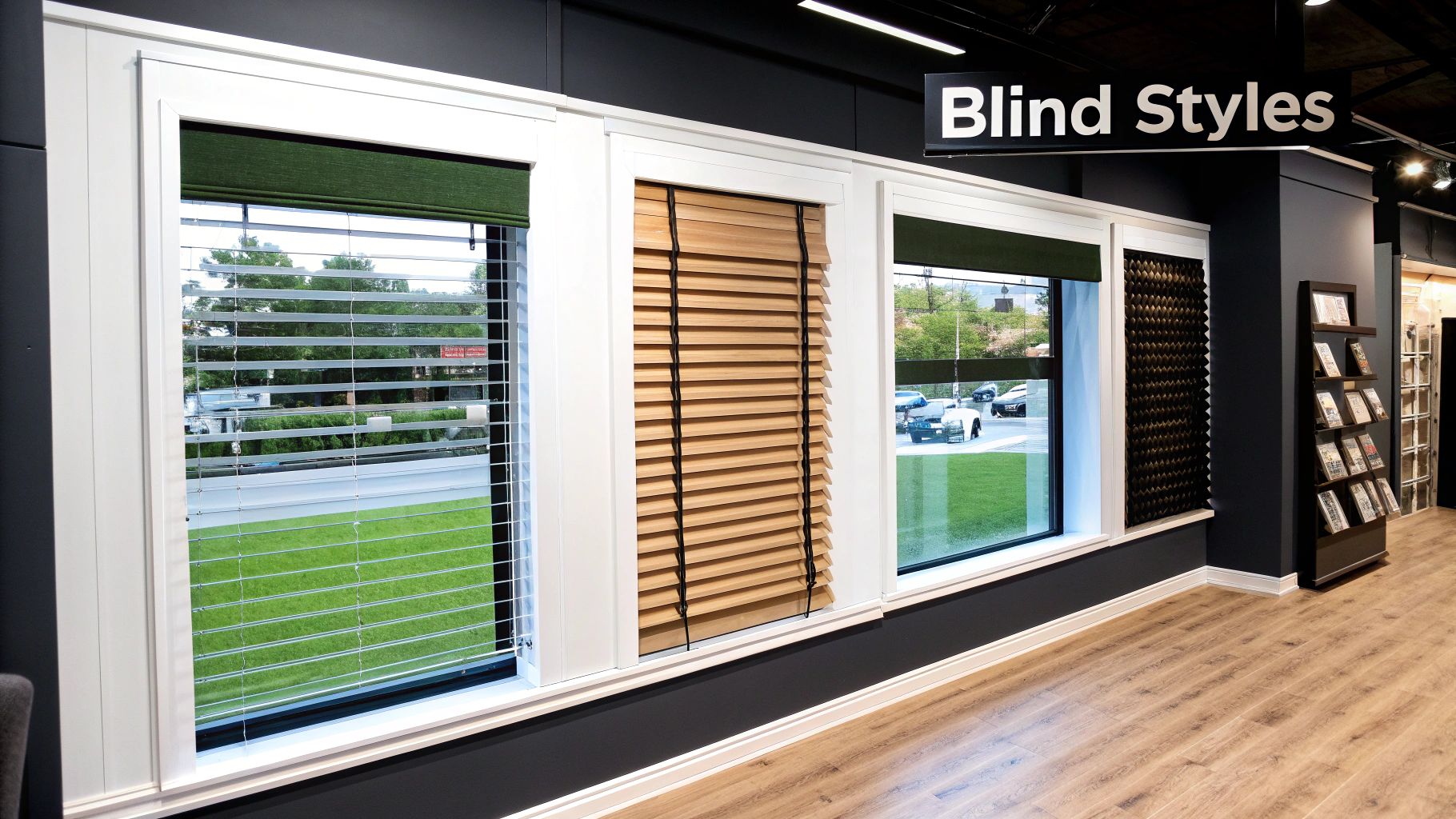
It’s no surprise that homeowners are increasingly drawn to practical yet stylish window treatments. In fact, the UK blinds market is expected to grow at a compound annual rate of 10.2% from 2025 to 2030. This shift shows a real appetite for efficient, modern solutions, and the specific needs of bay windows are a big part of that trend. You can read more about the future of UK window blind trends to see where things are headed.
Venetian Blinds: The Master of Light Control
Venetian blinds are a classic for a reason—they are incredibly versatile and a perfect match for bay windows. Their adjustable slats give you pinpoint control over light and privacy, letting you dial in the exact atmosphere you want at any time of day.
They come in a few different materials, each bringing its own feel to the space.
Wooden Venetians: These add a lovely natural warmth and a touch of traditional class. They’re a fantastic choice for living rooms or studies, blending perfectly with classic furniture.
Faux-Wood Venetians: You get the gorgeous look of real wood but with the added bonus of being moisture-resistant. This makes them the go-to for kitchens or bathrooms where steam and splashes are part of life.
Aluminium Venetians: For a sleek, modern look, you can't go wrong here. They’re lightweight, tough, and come in a massive range of colours to suit any contemporary home.
The real superpower of Venetian blinds is their precision. You can angle the slats to cut out harsh glare while still bathing the room in soft, ambient light. This is a game-changer for south-facing bay windows that get drenched in sun all day.
Roman Blinds: For a Touch of Soft Elegance
If you want to introduce some softness and texture, Roman blinds are an exceptional choice. They look stunning, creating a full panel of beautiful fabric when lowered and gathering into neat, luxurious folds when raised. It’s a style that instantly adds a sense of comfort and sophistication.
Roman blinds are right at home in living rooms and bedrooms, where creating a cosy vibe is the main goal. With a seemingly endless variety of fabrics, patterns, and colours available, you can really make a design statement. You can also boost their performance with special linings.
Blackout Lining: Essential for bedrooms, this ensures total darkness for a truly restful night’s sleep.
Thermal Lining: This adds an extra layer of insulation, helping to keep your room warmer in winter and cooler in summer—a brilliant feature for older, draughtier bay windows.
The decision between Romans and Rollers often boils down to a soft, decorative look versus a clean, minimal one. If you find yourself stuck, our guide on Roman blinds vs Roller blinds can help you weigh the pros and cons.
Roller Blinds: The Minimalist Solution
For a clean, uncluttered aesthetic, Roller blinds are hard to beat. They’re made from a single piece of fabric that rolls away discreetly, leaving you with a completely clear view when open. This beautiful simplicity makes them one of the best blinds for bay windows in modern or minimalist interiors.
Don't let their simple design fool you; Roller blinds are chameleons. They come in a huge range of finishes to tackle any job you throw at them.
Moisture-resistant fabrics are ideal for kitchens.
Blackout options are a parent's best friend in children's rooms.
Sheer or dim-out fabrics let you gently filter daylight without sacrificing your privacy.
Because they fit so snugly within the window recess, Roller blinds create crisp, clean lines that highlight the shape of a bay window without adding any visual bulk. They are also a fantastic budget-friendly option, making them a popular choice for a quick and stylish refresh.
Vertical Blinds: A Practical Choice for Larger Bays
Vertical blinds are an incredibly practical solution, especially if you’re dealing with a large, tall, or even floor-to-ceiling bay window. The individual fabric slats hang from a headrail and can be tilted or drawn open, giving you fantastic control over both light and privacy.
They really shine in spaces like conservatories or home offices, where you need to manage sunlight throughout the day. The long vertical lines also have a clever visual trick up their sleeve—they can make the window appear even taller and more dramatic.
While they were once seen as purely functional, today’s Vertical blinds come in an amazing range of modern colours, textures, and finishes. You can find everything from sleek monochromes to soft, fabric-like materials that blend right into a contemporary home. They are a durable, low-maintenance solution for even the most expansive bay windows.
How to Choose the Right Blind Material
Once you’ve settled on a style you love, the next big decision is the material. Think of the material as the personality of your blind—it dictates the look, the feel, and even how much care it will need down the line. The best blinds for bay windows aren’t just about aesthetics; they’re about finding a material that slots perfectly into your lifestyle and the room it’s in.
Picking the wrong material can cause all sorts of headaches. Imagine beautiful wooden blinds warping in a steamy kitchen, or a delicate fabric fading in a sun-soaked living room. By matching the material to the room's function, you’re not just choosing a blind; you’re making a smart investment that will look and perform brilliantly for years.
The Classic Warmth of Real Wood
There's something undeniably special about real wood Venetian blinds. They bring a timeless, natural elegance to a bay window that’s hard to beat. The authentic grain and rich tones add a sense of warmth and substance, making them a superb choice for living rooms, studies, and dining rooms where you want to create a sophisticated, almost architectural feel.
But, being a natural product, real wood can be a bit sensitive. It’s not the best choice for rooms with high humidity, like bathrooms or kitchens. Moisture can cause the slats to warp, twist, or discolour over time. They ask for a little more care, but the reward is an unparalleled classic charm.
Faux Wood: The Practical Alternative
If you adore the look of wood but need something a bit more life-proof, faux wood is the answer. Made from a tough composite material, these blinds are designed to handle the rough and tumble of daily life, making them a fantastic, worry-free option for just about any room.
Faux wood blinds really come into their own in kitchens and bathrooms. Here’s why they’re such a popular choice for these tricky spaces:
Moisture-Resistant: They won't warp, crack, or peel when faced with steam and humidity, which makes them perfect for a bay window right over the kitchen sink.
Easy to Clean: The smooth, non-porous surface is a breeze to clean. A quick wipe with a damp cloth is all it takes to deal with splashes and stains.
Incredibly Durable: They are tough and resilient, standing up well to the bumps and knocks of a busy family home.
This blend of classic style and modern practicality makes faux wood one of the most popular and sensible choices for dressing a bay window today.
The real beauty of faux wood lies in its versatility. It gives you the high-end look of real timber without the high-maintenance demands, offering a perfect balance of aesthetic appeal and everyday functionality that suits the modern home.
Sleek and Modern Aluminium
If your home has a more contemporary vibe, aluminium Venetian blinds are well worth considering. They offer a sleek, minimalist aesthetic with crisp, clean lines that give a bay window a sharp, modern edge. Aluminium is wonderfully lightweight yet surprisingly strong, and the slim slats create an uncluttered look that’s ideal for home offices or modern kitchens.
One of the biggest draws of aluminium is the incredible range of colours and finishes available. From subtle matt neutrals to vibrant gloss colours and chic metallic sheens, you can find a shade to complement any decor. On top of that, they’re incredibly easy to maintain and completely waterproof, adding to their practical appeal.
The Softness and Texture of Fabric
Fabric blinds, like Roman or Roller styles, introduce a completely different character to a bay window. They bring softness, texture, and colour in a way that harder materials simply can’t. This makes them ideal for creating a cosy, inviting atmosphere in bedrooms and living rooms.
The fabric you choose has a huge impact on both style and function. You could go for sheer fabrics to gently filter daylight, pick a bold pattern to make a statement, or opt for a textured weave to add depth and interest. Better still, fabric blinds can be fitted with special linings to boost their performance. A thermal lining, for example, adds an effective layer of insulation—a brilliant feature for older, draughtier bay windows that can even help you save on energy bills. To learn more, check out a homeowner’s guide to insulated window blinds, which explains how the right material can help keep your rooms comfortable all year round.
Measuring Bay Windows for Blinds Like a Pro
Getting the measurements spot-on is the single most important part of fitting blinds to a bay window. It's what separates a sleek, professional finish from a wonky, ill-fitting disaster. The angles might look a bit daunting, but once you know the steps, it’s a surprisingly simple job.
Think of it like getting a suit tailored. You could buy one off the peg and hope for the best, but a made-to-measure one will always look a million times better because it's designed for your exact shape. It's the same with blinds; precise measurements mean they’ll hang beautifully and work smoothly.
This infographic lays out the three key stages to give you a clear roadmap before you even pick up a tape measure.
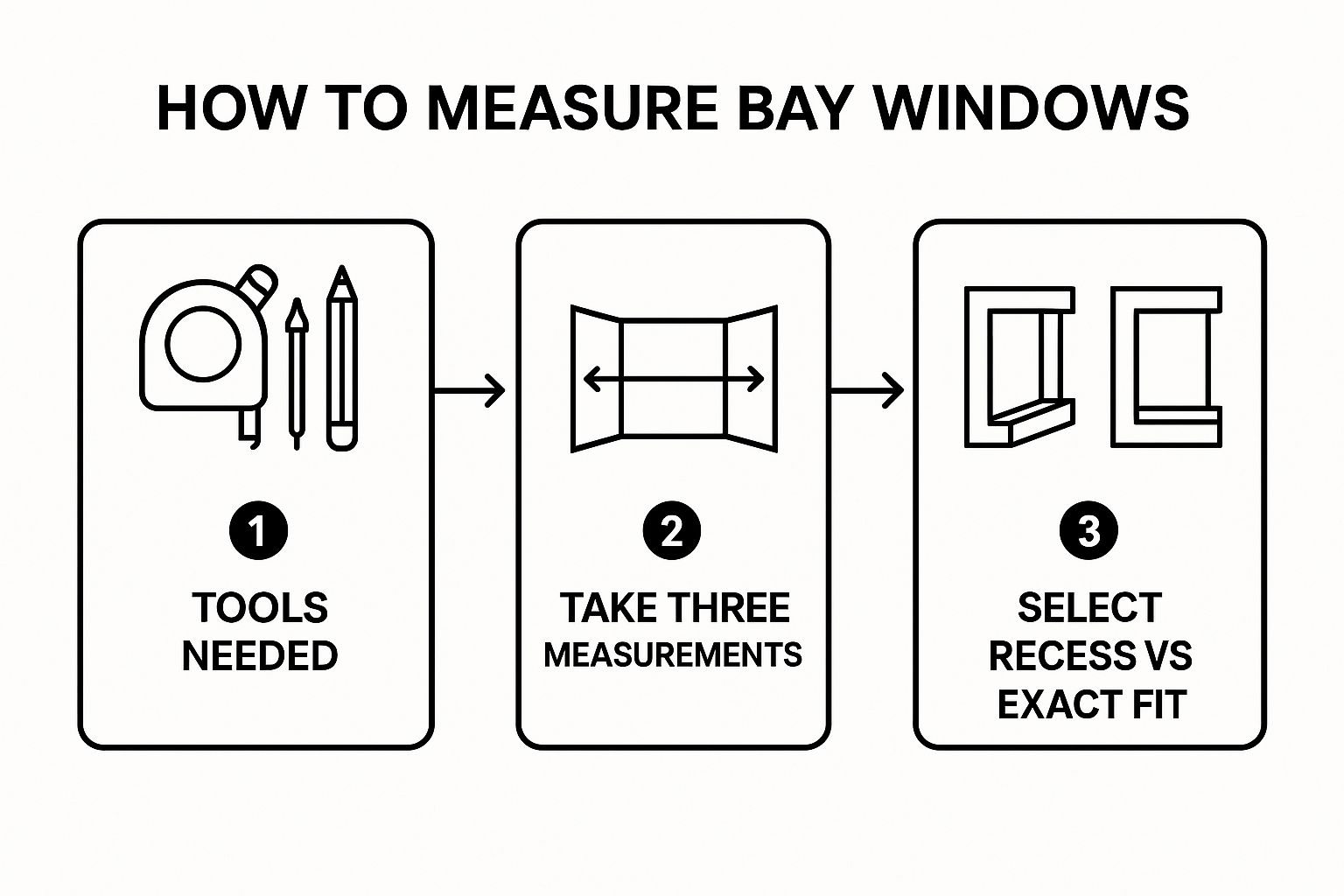
As you can see, it all starts with having the right gear, followed by a methodical approach to measuring, and finishes with a key decision about how you want the blinds to hang.
Assembling Your Measuring Toolkit
Before you do anything else, grab a few basic tools. This will make the whole process quicker, easier, and far more accurate. You don't need a professional workshop, just the essentials.
A Metal Tape Measure: This is absolutely essential. A fabric or plastic one can stretch or sag, throwing your measurements off. A good quality metal tape measure is your best friend here.
A Pencil and Paper: Don't try to remember the numbers. Jot them down as you go, and make sure to label which pane each measurement is for.
A Spirit Level (Optional but Recommended): A great little tool for checking if your window frames are truly level. You’d be surprised how many aren’t, especially in older houses.
A Step Ladder: For reaching the tops of your windows safely and easily, without stretching and getting an awkward angle on the tape.
Once you’ve got these handy, you're ready to start measuring with confidence.
The Professional Trick: Measure Thrice
Here’s a secret from the pros: always measure each window in three different places. Window frames, particularly in older homes, are almost never perfectly square. This simple habit accounts for any little quirks and prevents a world of frustration later on.
For the Width:
Measure across the very top of the window recess.
Take another measurement across the middle.
Finally, measure across the bottom, close to the sill.
For the Drop (Height):
Measure from top to bottom on the left-hand side.
Do the same down the centre.
And one last time down the right-hand side.
When you're ordering blinds to fit inside the recess, always, always use the smallest of your three measurements for both the width and the drop. This guarantees the blind will fit into the narrowest point of the frame and won't snag or catch as it moves.
Recess Fit vs Exact Fit: The Key Decision
The last piece of the puzzle is deciding where your blinds will sit. This choice changes the look completely, but more importantly, it affects the measurements you'll need to provide.
Recess Fit (Inside Mount):This is the go-to choice for most bay windows. The blind sits snugly inside the window frame, which gives a really clean, tidy finish that shows off the shape of the bay. For a recess fit, you just provide us with the exact wall-to-wall measurements of the opening. We then make a tiny deduction (usually about 1cm from the width) so the blind operates smoothly without scraping the sides. For anyone wanting that perfectly tailored look, exploring options for custom-blinds is the best way to get an impeccable result.
Exact Fit (Outside Mount):With an exact fit, the blind is installed outside the recess, overlapping the opening on the wall or the window frame itself. You need to give us the exact final size you want the blind to be, and we'll make it to those precise dimensions with no deductions. This is a handy solution if your recess is too shallow for a blind mechanism or if you have things like bulky handles in the way. For this style, you’ll want to add at least 7-10cm to your width and drop measurements to make sure you get good coverage and block out enough light.
By following this simple plan—get your tools, measure thrice, and choose your fit—you'll have all the accurate details needed to order blinds that will look fantastic and fit your bay window perfectly.
A Practical Guide to Installing Your Blinds
You've got your perfectly measured blinds ready to go, and now for the final, most rewarding part: the installation. This is the moment it all comes together, where a bit of DIY transforms your bay window and gives you that flawless, professional finish. It might look a bit technical, but trust me, with some careful planning and a step-by-step approach, it's a job you can definitely tackle.
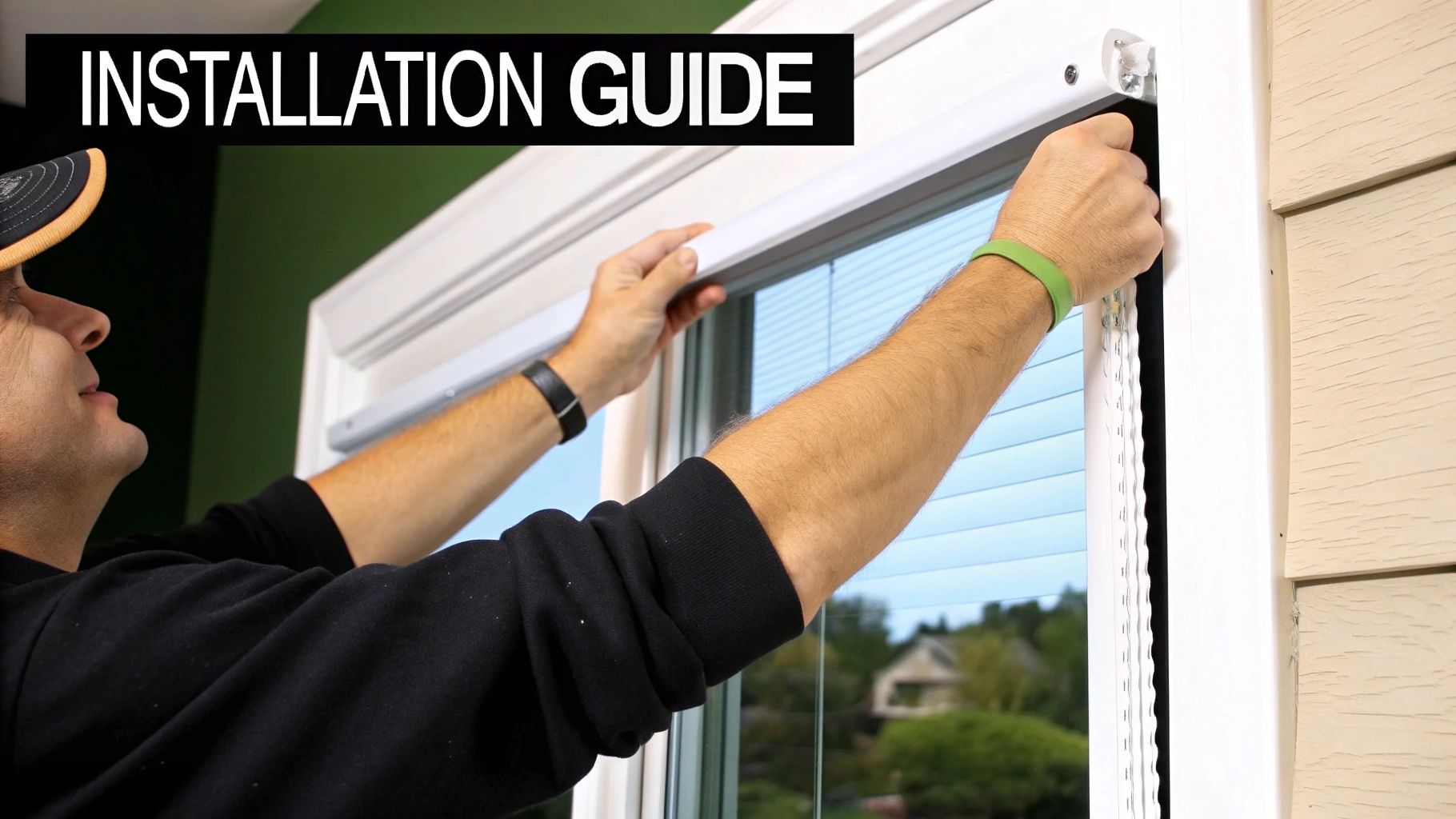
Whether you’re fitting three separate blinds into each pane or using a clever corner-post system, the basic principles don’t change. It all comes down to getting the brackets in the right place, making sure the headrail is level, and checking that everything works smoothly. Let’s break it down.
Preparing for a Smooth Installation
A bit of prep work before you pick up the drill will save you a world of headaches. Start by carefully unpacking your new blinds and doing a quick inventory. Check you have all the bits and pieces—brackets, screws, and any other fixings should be all present and correct. It's a good idea to lay everything out on a soft towel or blanket to avoid scratching your new blinds or the windowsill.
Next, gather your toolkit. You won't need anything too specialist, just the basics:
A Pencil: For marking up your drill points.
A Metal Tape Measure: For double-checking your marks.
A Power Drill: Make sure you have the right drill bit for the surface (wood, plaster, or brick).
A Spirit Level: This is your best friend for ensuring your blinds hang perfectly straight.
Before you make any permanent marks, do one final dry run. Hold the blind up to the window where it's going to sit. This simple check gives you a last chance to spot any issues and confirms everything is spot-on before you commit to drilling.
Mounting Your Brackets Securely
The brackets are the foundation of the whole setup, so getting them right is non-negotiable for a secure, level fit. Your blinds will come with their own instructions, but the general process is pretty much the same for all of them. Always start with the two end brackets.
If you’re fitting inside the recess, a good rule of thumb is to position the first bracket about 5cm in from the side of the frame. Mark your screw holes with a pencil, then do the exact same on the other side. For wider blinds, you'll have a centre support bracket, too. Just place this bang in the middle, making sure it won't get in the way of any of the cords or mechanisms inside the headrail.
Top Tip: Always use the right wall plugs for your surface. Plasterboard needs different fixings to brick, for example. Using the correct ones is crucial for making sure your brackets can safely hold the weight of the blind for years to come.
Once your holes are marked, pre-drill them to make it easier to get the screws in. Then, screw the brackets firmly into place. Grab your spirit level and place it across the top of the brackets to be absolutely certain they’re perfectly aligned before moving on.
Attaching the Blinds and Final Checks
With the brackets securely in place, it’s time for the satisfying click. Depending on the style of your blind, the headrail will either click, slide, or lock into the brackets. Listen or feel for that secure connection and give it a gentle tug to make sure it’s not going anywhere.
Now for the test drive. Lower and raise the blind a few times to see how it moves. If you have Venetians, tilt the slats open and closed. It should all feel smooth and effortless. If you feel any snagging or see it hanging on a slant, it’s a sign that a bracket might be a fraction out of line.
Finally, and this is a really important step, attach any safety devices included with your blind, like a cord cleat or tensioner. This is vital in any home, but especially if you have young children or pets. These simple devices keep loose cords tidy and safely out of reach, giving you complete peace of mind.
Got Questions About Bay Window Blinds? We’ve Got Answers.
Even with all the options laid out, a few common questions always seem to surface when you’re on the brink of choosing blinds for your bay window. Getting these last few details sorted is what turns a good choice into a great one. Let’s tackle some of the most frequent queries we hear from homeowners.
Think of this as your final checklist. We'll cover everything from whether one big blind will work (spoiler: it won't) to navigating those awkward window handles, giving you the practical know-how for a flawless finish.
Can I Just Use One Big Blind to Cover the Whole Bay?
It’s a tempting thought, isn't it? One blind, one pull cord, job done. But in reality, trying to span a bay with a single blind is a non-starter. A bay window is, by its nature, a series of angled panels, and a flat, straight blind just can't follow that curve. You’d end up with huge, unsightly gaps at the sides that would kill any chance of privacy or decent light control.
The only way to do it right is to treat each window panel as its own entity and fit a separate blind to each one. This approach gives you that sharp, custom-fitted look that perfectly hugs the architecture of the bay. Plus, it gives you far more control over light and shade across the different panes.
Are Perfect Fit Blinds a Good Shout for uPVC Bays?
They’re more than a good shout – for modern uPVC bays, they’re often the perfect solution. Perfect Fit blinds are ingeniously designed to clip straight into the window frame itself. That means no drills, no screws, and no mess. This is a huge plus if you're worried about damaging your frames or voiding your window warranty.
The real beauty of Perfect Fit is that the blind sits in its own frame, becoming part of the window. When you open the window or door, the blind moves with it. It’s an incredibly neat and tidy system that keeps your windowsills completely free. You can get them in all sorts of styles too, like Venetian or Roller, so you're not compromising on looks.
My Window Handles Stick Out. What Can I Do?
Ah, the protruding window handle – a classic bay window challenge! But don't worry, it's easily solved. The fix usually depends on the blind you've chosen. If you're fitting your blinds inside the recess, you can use little things called ‘spacer blocks’ or ‘extension brackets’. These simply push the blind's headrail a little further away from the window, giving the fabric or slats enough room to clear the handle when you operate them.
Another smart move is to pick a blind with a slim profile to begin with, like a Roller blind or a Venetian with thin slats. When you’re placing your order, it's always wise to mention how far your handles stick out. Any good supplier will be able to advise on the best fitting solution to make sure everything works smoothly.
Which Blinds Will Help Insulate My Draughty Bay?
A chilly bay window can really suck the warmth out of a room, but the right blinds can make a massive difference. If insulation is your priority, then thermal Roman blinds and honeycomb blinds (sometimes called cellular blinds) are your two best bets.
Thermal Roman Blinds: These come with a special thermal lining stitched in. This lining traps a pocket of air between the fabric and the cold glass, acting as a barrier that stops heat from escaping in winter and keeps the room cooler in summer.
Honeycomb Blinds: These are the superstars of insulation. Their unique honeycomb-shaped structure is engineered to trap air in distinct pockets, creating an incredibly effective thermal shield against the glass.
Choosing either of these styles is a smart investment that not only looks great but can genuinely help make your home more energy-efficient and comfortable.
Ready to find the perfect, made-to-measure solution for your bay window? At Blindsmart, we specialise in creating beautiful, functional blinds tailored to your exact needs. Explore our collection online or visit our showroom to get started.
Article created using [Outrank](https://outrank.so)
Comments