
A UK Guide to Energy Efficient Window Blinds
- Blindsmart im
- Nov 1
- 15 min read

Think of energy-efficient blinds as a thermal shield for your windows. In winter, they trap precious heat inside, and in summer, they do the opposite, reflecting the sun's glare to keep your rooms cool. This simple change means you'll lean less on your heating and air conditioning, which is a fantastic way to see real savings on your energy bills.
How Energy-Efficient Blinds Lower Your Bills
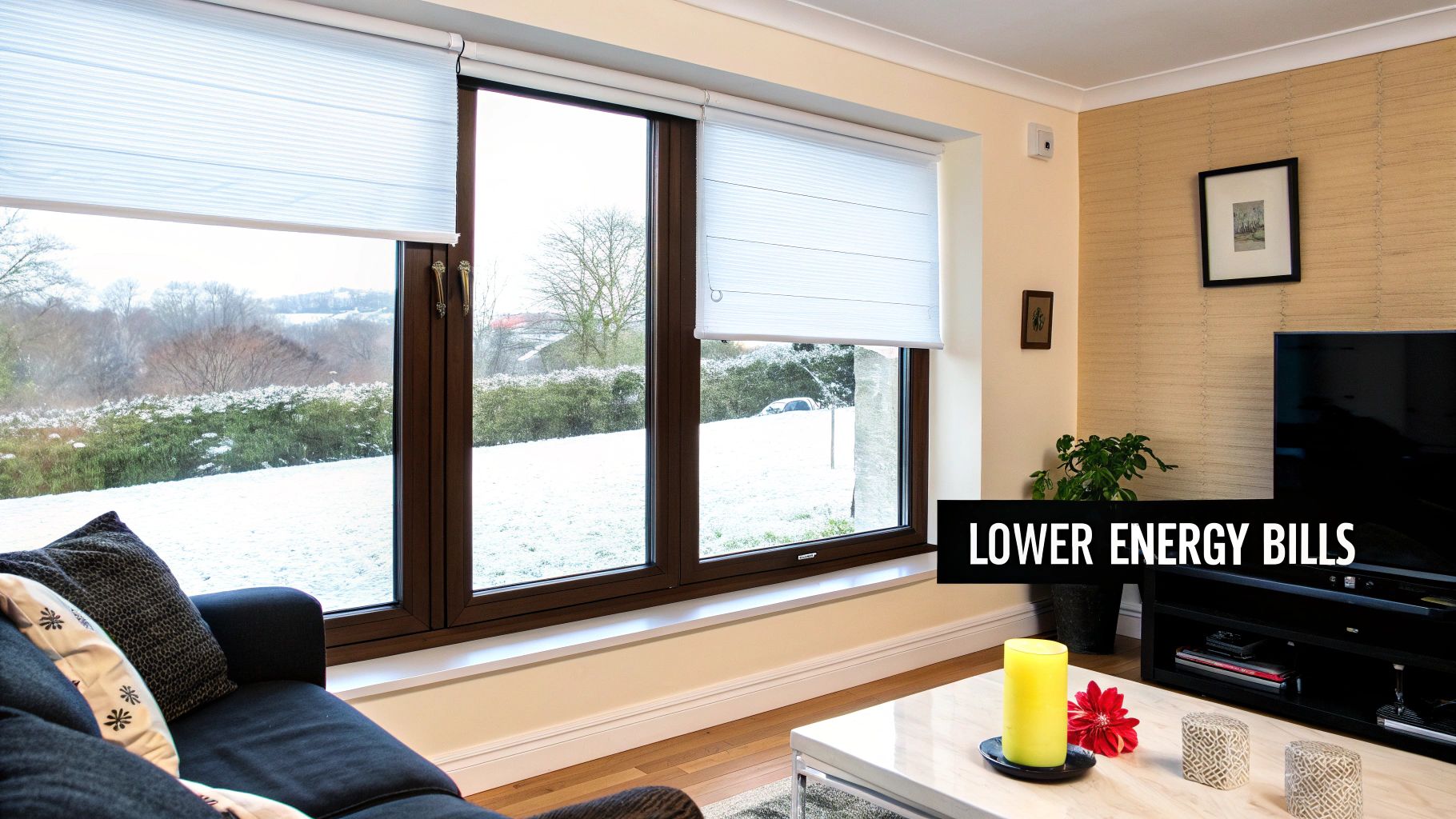
Your windows are often the weakest link in your home's insulation. Left bare, they let warmth seep out on chilly days and allow the summer sun to bake your living space, making your boiler or air-con unit work much harder than it needs to.
Energy-efficient blinds are specifically engineered to tackle this heat transfer head-on. They create a pocket of still air between the fabric and the glass, and this air acts as an excellent insulator, slowing down the movement of heat. It's the same principle that a thermos flask uses to keep your coffee hot for hours.
The Year-Round Advantage: Summer Cooling and Winter Warmth
What makes these blinds so clever is that they work all year round. They aren’t just a one-season wonder; they adapt to your home’s needs, actively cutting your energy use no matter the weather.
During the colder months, that insulating layer is your best friend. It keeps the warmth from your central heating right where you want it—inside your home. Your thermostat won't need to click on nearly as often to keep things cosy, and that translates directly into lower heating bills.
Then, when summer rolls around, many energy-efficient window blinds come with a reflective backing. This special surface bounces the sun’s rays away from the glass before they can turn your room into a greenhouse. By blocking that solar heat, your home stays naturally cooler, meaning you won't have to rely on power-hungry fans or air conditioning.
The results are genuinely impressive. The right blinds can slash heat loss through windows by up to 27% in winter and reduce heat gain by a massive 77% in summer.
This isn't just about comfort; it's about tangible savings and a smaller carbon footprint. The right window dressing is more than just a decorative touch—it’s an active part of your home’s climate control.
As research into the UK window covering market shows, homeowners are increasingly realising that these products are key to managing household energy use. Choosing the right blinds is a smart investment that pays you back with comfort, style, and lower bills for years to come.
How Thermal Blinds Actually Work
To really get why energy-efficient blinds are so effective, it helps to dive into the science behind them. It’s not just about putting a bit of fabric in front of a window; it’s about smartly managing how heat moves in and out of your home. The real genius is how they tackle the three ways heat gets around.
At its heart, heat transfer is just energy looking for balance, always moving from a warmer spot to a cooler one. For your home, that means your precious warmth seeping outside on a chilly day, or the summer sun baking your living room. Thermal blinds act as a gatekeeper, putting the brakes on that entire process.
Stopping Heat Loss Through Conduction and Convection
Most of the heat you lose through a window escapes via conduction and convection. Conduction is simply heat passing through a solid material – think of how a hot mug of tea warms your hands. Your window panes do the same thing, letting heat pass right through the glass into the cold air outside.
Convection is a bit different; it’s heat moving through the air. The warm air from your radiator rises, hits the cold window glass, cools down, and sinks to the floor. This creates a constant loop, a convection current, that literally pulls heat out of the room.
This is where the clever design of cellular or honeycomb blinds really shines. Their unique shape creates dozens of little air pockets. Because trapped air is a terrible conductor of heat, these pockets form an insulating barrier, working in much the same way as the gap in double glazing.
This barrier slashes the heat lost through both conduction and those pesky convection currents. The payoff? A much steadier indoor temperature and a boiler that doesn't have to work nearly as hard.
Beating the Heat with Radiant Barrier
The third type of heat transfer is radiation. It’s how the sun warms the earth, sending energy out in waves. When those waves hit your windows in summer, they stream inside and heat up everything they touch – your floors, your furniture, your air. This is what we call solar gain.
This is where another brilliant feature of energy-efficient blinds comes in: a reflective backing. Many thermal blinds have a light-coloured or even metallic-style layer on the side that faces the glass.
This reflective surface acts like a mirror for heat, bouncing the sun’s infrared rays back outside before they ever have a chance to turn your room into a greenhouse. It’s a beautifully simple way to keep your home cool and comfortable without having to sit in the dark. This is a big reason why thermal blackout roller blinds for home comfort are so popular for managing a home's climate.
Putting It All Together for All-Year Comfort
What makes thermal blinds so powerful is how they combine these scientific principles. They’re not a one-trick pony; they’re a complete thermal defence system for your windows.
Trapped Air Pockets: In winter, these disrupt conduction and convection to keep your expensive heat right where you want it – inside.
Reflective Backings: In summer, these block solar gain by reflecting radiant heat, stopping your rooms from overheating.
A Snug Fit: A well-fitted blind also minimises drafts and airflow around the window frame, adding another layer to its insulating power.
Once you understand how these elements work together, you can see beyond the marketing spiel. You're not just buying a window dressing; you're investing in a piece of smart technology designed to control your home’s environment, save you money, and make your space more comfortable, every single day.
Choosing the Best Materials and Styles for Your Home
Picking the right energy-efficient window blinds is a bit of a balancing act. It's about finding that sweet spot where top-notch thermal performance meets your home's unique style and your day-to-day needs. With so many options out there, it’s easy to feel a bit lost, but getting to grips with the key differences will help you make a great choice for every room.
The first step is to look past the colour and think about the construction. Different materials and styles are designed to solve different problems, whether that’s trapping heat in winter or bouncing the sun's glare away in summer. What works perfectly for a cool, north-facing living room might not be the best fit for a steamy kitchen window.
Let's break down the main contenders.
This infographic gives a great overview of how thermal blinds tackle the three ways heat moves.
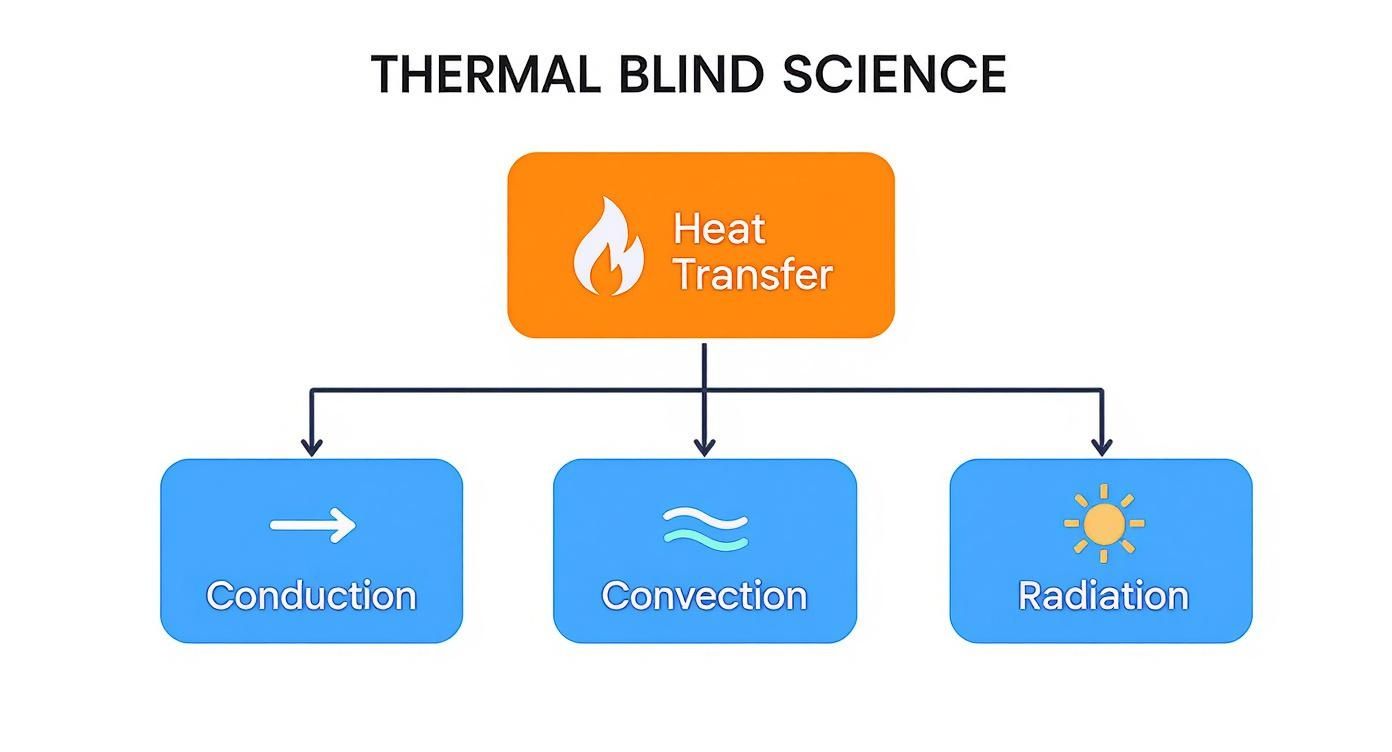
As you can see, it all comes down to managing conduction, convection, and radiation. Getting this right is what makes these blinds so brilliant at keeping your home comfortable all year round.
Cellular Blinds: The Insulation Champions
When it comes to pure thermal performance, cellular blinds are in a league of their own. You might know them as honeycomb blinds, and their design is a clever bit of engineering inspired by nature. They’re built with unique, honeycomb-shaped pockets that trap air, creating a powerful insulating barrier against the cold glass.
Think of it like the air gap in double-glazing, but for your window covering. This trapped layer of still air drastically slows down heat transfer, keeping your home warmer in winter and cooler in summer. The bigger the cells, the more air they hold and the better the insulation. For rooms where temperature is the number one priority, like a bedroom or a draughty lounge, cellular blinds are an unbeatable choice.
If you're aiming to create the perfect sleep sanctuary, our guide on the best blinds for bedroom windows has some extra tips on balancing thermal efficiency with light control.
Roman Blinds: Style Meets Substance
If you love the soft, plush look of fabric, thermally-lined Roman blinds offer a fantastic mix of timeless style and modern efficiency. A standard Roman blind provides a bit of insulation on its own, but adding a specialised thermal lining takes its performance to a whole new level.
This extra layer, which often has a blackout quality, acts as a solid shield against heat loss and unwanted solar gain. When lowered, the folds of fabric also help trap a layer of air next to the window, boosting their insulating power. They bring a sense of warmth and texture that other styles just can't match, making them perfect for living rooms, dining rooms, and bedrooms where looks matter just as much as function.
Key Takeaway: The secret to a high-performing Roman blind is in its lining. Always go for a dedicated thermal or blackout lining to get the full energy-saving benefits.
Roller Blinds: Simple and Effective
Roller blinds are loved for their clean, minimalist look, but with the right fabric, they can be surprisingly powerful energy savers. A standard, thin roller blind won't do much, but a thermal blackout version is a completely different beast.
These are made from a multi-layered fabric that often has a reflective backing on the side facing the window. This design is brilliant at blocking intense sunlight and the heat that comes with it, making them a superb choice for south-facing rooms that can turn into a greenhouse in summer. They're also wonderfully practical and easy to wipe clean, which is why you see them so often in kitchens and bathrooms.
Venetian Blinds: A Surprising Contender
You might not immediately think of Venetian blinds as being particularly energy-efficient, but modern designs have changed the game. While the classic aluminium blinds can conduct heat, their insulated or wooden counterparts perform far better.
Insulated Venetian Blinds: These feature hollow slats or are made from advanced composite materials designed specifically to reduce heat transfer.
Wooden Venetian Blinds: Wood is a fantastic natural insulator. The thick slats of a wooden blind create a really substantial barrier that helps to slow down heat from escaping.
The real magic of Venetian blinds, though, is their adjustability. You can tilt the slats with precision to control daylight, bouncing harsh solar heat away in the summer or angling them to let in welcome passive warmth during the winter. This level of control gives you a flexible and hands-on way to manage your home’s climate.
To help you decide, let's look at how these popular styles stack up against each other. Each has its own strengths, and the best choice often comes down to the specific needs of the room you're decorating.
Comparing Energy Efficient Blind Styles
Blind Style | Primary Material | Insulation Level (Good/Better/Best) | Best For Summer Heat | Best For Winter Warmth |
|---|---|---|---|---|
Cellular (Honeycomb) | Spunlace Fabric | Best | Best | Best |
Thermally-Lined Roman | Fabric with Thermal Lining | Better | Good | Better |
Thermal Roller | Multi-layered Coated Fabric | Better | Best | Good |
Wooden Venetian | Natural Wood | Good | Better | Good |
This table shows that while cellular blinds are the clear all-round winner for insulation, other styles like thermal rollers and Roman blinds offer excellent performance, especially when targeting either summer heat or winter warmth specifically. It really pays to match the blind to the problem you're trying to solve.
Using Smart Blinds for Maximum Energy Efficiency
While any thermal blinds give you a leg up on energy savings, automation is where they truly shine. Adding smart controls to your energy efficient window blinds turns them from a simple window covering into a responsive, intelligent part of your home’s climate system.
The idea is straightforward: automation takes human error and forgetfulness out of the equation. It means your blinds are always in the perfect position at the perfect time, saving energy without you even having to think about it.
How Smart Blinds Work
Smart blinds are essentially motorised blinds you can control from anywhere. Gone are the days of cords and wands; these use a quiet motor that you can operate with a remote, a smartphone app, or even voice commands.
But the real magic kicks in when you set them to operate on their own. This can be done in a few ways:
Simple Timers: You can set your blinds on a schedule to open and close at specific times, just like you would with your central heating.
Sensors: More advanced setups use light or temperature sensors. These can trigger the blinds to close automatically when the sun gets too strong or open up if the room gets a bit chilly.
Smart Home Integration: This is the cleverest approach. By linking your blinds to a smart home hub like Amazon Alexa, Google Assistant, or Apple HomeKit, you can create detailed routines. They can work in concert with your lights, thermostat, and other connected devices.
With this kind of control, your blinds stop being just a decorative item and become a proactive tool for managing your home’s energy.
When you consistently optimise the position of your blinds, you're always maximising insulation and blocking unwanted solar heat. This isn't just a fancy gadget; it's a practical upgrade for anyone serious about energy efficiency.
Real-World Scenarios for Effortless Savings
To really get your head around the benefits, let's picture how automated blinds might work in a typical home. The system essentially learns to work with the sun, capturing its warmth when you need it and blocking it out when you don't.
A Summer Morning:Imagine your east-facing bedroom. The blinds are set to stay closed until 9 am, blocking the intense morning sun before it has a chance to heat the room. You get to wake up in a cool, comfortable space without ever lifting a finger.
A Winter Afternoon:Now, picture your south-facing living room on a bright but cold day. The blinds automatically open around noon to let in the low-angled sun. This floods the room with free warmth—a principle known as passive solar heating. As soon as dusk begins to fall, they close again, trapping all that heat inside for the evening.
This hands-off approach ensures your home is constantly working to be as efficient as possible. Experts estimate that smart blinds can cut energy use by up to 20% in typical UK homes, depending on the climate and how they're used. As smart home technology becomes more common, this kind of seamless integration is central to creating truly efficient homes. You can see this trend reflected in the growing UK blinds and shades market, which has a strong focus on automation.
Making Efficiency the Default Setting
Ultimately, the biggest win with smart blinds is that they make energy efficiency the default for your home. You no longer have to remember to shut the blinds on a scorching day or open them to catch the winter sun—the system does it all for you.
This reliable, precise management guarantees you’re getting the most out of your energy efficient window blinds every single day. It turns a smart home upgrade into an investment that actively pays for itself through lower energy bills and a more comfortable home, all year round.
Why a Perfect Fit is Everything
You can choose the most technically advanced, highest-rated thermal blinds available, but if they don't fit your window perfectly, you're simply not going to get the results you paid for. The whole point of a thermal blind is to trap a pocket of still air against the glass, and that effect is completely ruined by a poor installation.
Think of it like wearing a top-of-the-range winter coat but leaving it wide open. The coat itself is brilliant, but the gap lets the cold air flood in, making the insulation useless. A badly fitted blind is exactly the same, allowing air to sneak around the edges and undo all its good work.
That’s why a professional, precise installation isn’t just an afterthought—it’s absolutely fundamental to how the blind performs.
Inside Mount vs. Outside Mount: Which is Best for Insulation?
When you install blinds, you have two main choices, and your decision directly affects how well they insulate your room.
Inside Mount: This is where the blind fits neatly inside the window recess. It creates a clean, built-in look and is usually the top choice for energy efficiency. Why? Because it sits closer to the glass, making it easier to form a tight seal. The only catch is that your measurements have to be spot on.
Outside Mount: Here, the blind is mounted on the wall outside and above the window recess, overlapping the frame. This is a much more forgiving method if your window frames aren't perfectly square. To make it work for insulation, the blind needs to extend well beyond the frame on all sides to cover any potential gaps.
For most homes, a perfectly measured inside mount will give you the best thermal performance by minimising the air leaks around the edges.
The Problem with Gaps
The biggest enemy of an energy-efficient installation is the air gap. Those little spaces around the edges of your blind are where heat-sapping convection currents get started. Warm air from your room drifts towards the cold glass, cools down, sinks, and circulates back into the room. It’s a constant, wasteful cycle of heat loss.
Even a gap of a few millimetres is enough to kickstart this process and slash the blind's effectiveness. This is why getting the measurements right is the most critical step of all. A snug fit, tight to the frame, should be your number one goal.
A correctly installed blind with minimal gaps can be 25% more effective at insulating than the exact same blind with a sloppy, loose fit. It’s the single biggest factor you can control to guarantee you get the energy savings you paid for.
Advanced Options for the Ultimate Seal
If you’re looking for the absolute best performance, there are specialist fitting options designed to virtually eliminate air gaps altogether. These are brilliant for rooms where temperature control is a top priority, like bedrooms or nurseries.
One of the most effective solutions is fitting your blinds with side channels. These are simply vertical tracks that run down the sides of the window recess, and the blind fabric slides inside them. This creates an almost perfect seal, stopping drafts and light leakage in their tracks.
Another fantastic option is a cassette blind. Here, the roller at the top is tucked away inside a housing (the cassette). This can be combined with side channels to create a complete four-sided frame, offering the ultimate seal against the window. These systems are a smart investment for maximising your energy savings. The installation is a bit more involved, but you can get a feel for the measurement principles in our guide on how to install Venetian blinds.
Calculating Your Return on Investment
It’s easy to look at energy-efficient blinds as just another expense, but that’s missing the bigger picture. Think of them less as a purchase and more as an investment in your home—one that starts paying you back from the moment they're fitted.
The real value comes from calculating the return on investment, or ROI. In simple terms, this is just working out how long it takes for the savings on your energy bills to cover the initial cost of the blinds. For most homes in the UK, you might be surprised at how quickly that happens.
Estimating Your Potential Savings
Let's walk through a rough calculation. Of course, the exact numbers will depend on your energy supplier and how many windows you have, but this gives you a solid idea of what to expect for a typical three-bedroom UK house.
Initial Cost: Imagine you spend around £900 to install good quality thermal blinds in the main rooms.
Annual Heating Savings: If your yearly heating bill is about £1,200, and the blinds cut heat loss by a conservative 15%, you’re saving £180 right there.
Annual Cooling Savings: We don't get scorching summers every year, but blocking out the sun reduces the need for fans. This could easily save you another £20-£30 a year.
Add it all up, and you’re looking at savings of about £210 annually. In this example, the blinds would pay for themselves in just over four years. After that, it’s pure savings, year in, year out.
Key Insight: Unlike a new coat of paint or some decorative cushions, energy-efficient blinds offer a tangible financial return. Every pound you save on energy chips away at the initial cost, making them one of the smartest home improvements you can make.
The Impact on Your Home's EPC Rating
The benefits don't stop with your monthly bills. Installing high-quality thermal blinds can also give your home’s Energy Performance Certificate (EPC) rating a welcome nudge in the right direction. An EPC is a must-have when you build, sell, or rent a property, and a better rating makes your home far more appealing.
Improving insulation is a surefire way to boost your EPC score. While blinds alone won't magically turn a D-rated home into an A-rated one, they absolutely contribute. They are a clear sign that you’ve taken practical steps to make the property more thermally efficient, a key factor assessors look for. A higher EPC not only adds value but also shows that your home is comfortable and cheaper to run—a huge advantage in a competitive property market.
Got Questions? We've Got Answers
Even after learning all about the benefits, it's completely normal to have a few lingering questions. Making the right choice for your home is important, so we’ve put together answers to the most common queries we hear from UK homeowners. Hopefully, this will help you feel completely confident in your decision.
Will Energy-Efficient Blinds Plunge My Room into Darkness?
Not at all—unless that’s what you’re looking for! While thermal blackout blinds are fantastic for creating a dark, restful space in a bedroom, you don't have to sacrifice daylight for efficiency.
Many of our most popular styles, like cellular and Roman blinds, are available in beautiful light-filtering fabrics. They cleverly reduce heat transfer while still letting a soft, natural glow fill your room. You really can have the best of both worlds.
Do Thermal Blinds Cost a Lot More Than Standard Ones?
There is a slight difference in the initial price tag, but it’s best to think of it as a smart investment rather than just a purchase.
The real value comes from the money you’ll save on your heating and cooling bills, month after month. Over just a few years, they essentially pay for themselves, which makes them the more sensible financial choice in the long run.
It’s worth remembering that a genuinely energy-efficient blind is built differently. It will have special thermal linings, honeycomb-like air pockets, or reflective backings. A standard blind just doesn't have this technology and won't make a noticeable difference to your energy bills.
How Do I Keep My Thermal Blinds Looking Great?
Keeping them clean is surprisingly simple, and the method just depends on the material.
For fabric blinds (like cellular or Roman styles), a quick, light dusting or a gentle once-over with your vacuum’s soft brush attachment is usually all you need.
For hard blinds (such as wooden or insulated Venetian blinds), a simple wipe with a soft, damp cloth will do the trick.
It's always a good idea to check the manufacturer's care instructions, just to be sure you're protecting their thermal qualities for years to come.
Ready to find the perfect energy-efficient blinds for your home? The friendly team at Blindsmart is here to guide you through our extensive range of made-to-measure options. Pop into our showroom or get in touch online to start making your home more comfortable and cost-effective.
Comments