
what are roman blinds: A quick style guide
- Blindsmart im
- Nov 3
- 10 min read

Roman blinds are a fantastic choice for window dressing, essentially offering the best of both worlds. They combine the soft, luxurious feel of a curtain with the neat, practical functionality of a blind.
Unlike blinds with slats, a Roman blind is made from a single, continuous piece of fabric that concertinas up into soft, horizontal folds when you raise it.
What Makes Roman Blinds So Popular?
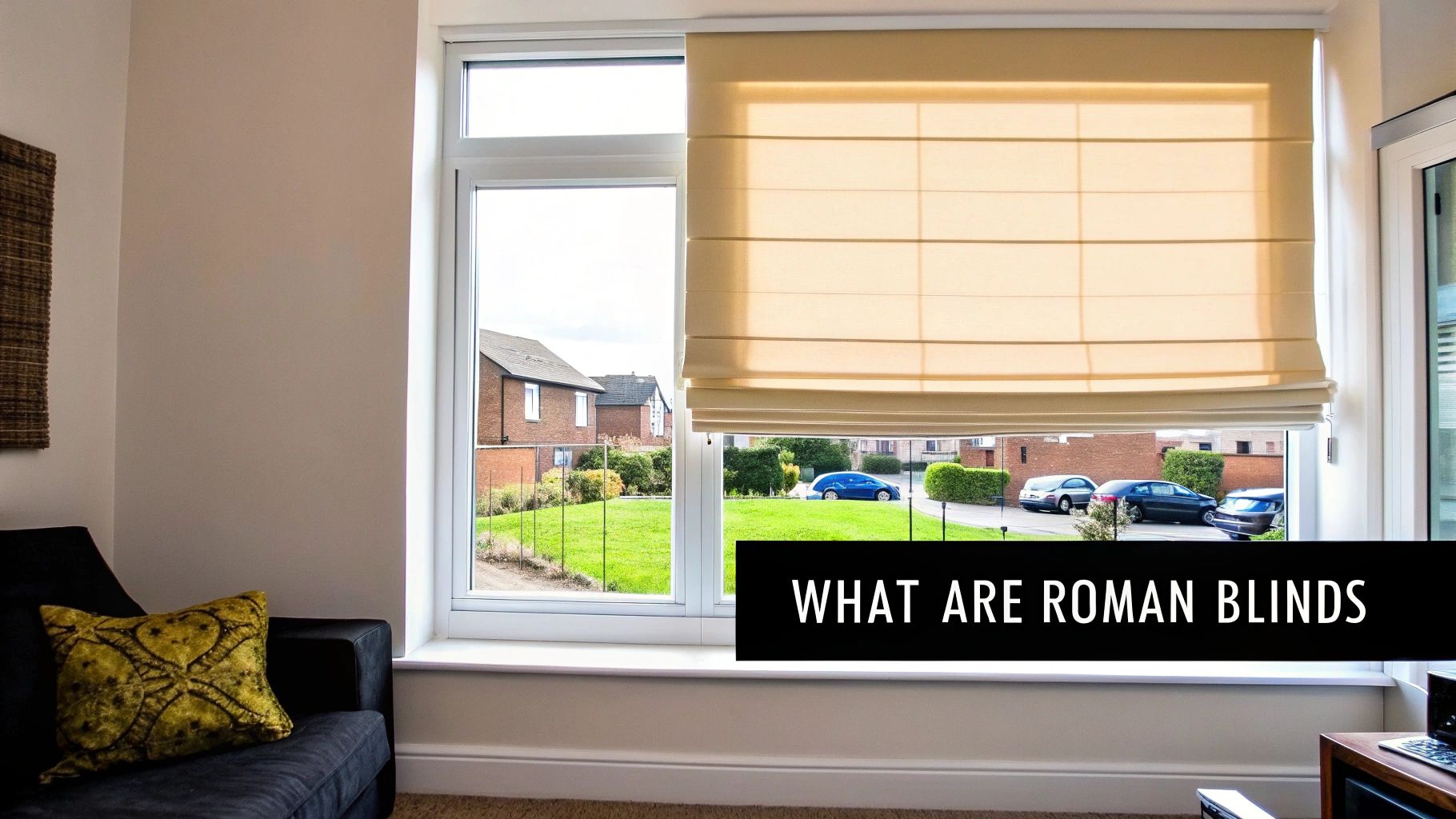
Think of a window treatment that perfectly blends style with simplicity, and you've got the Roman blind. The magic is in the mechanism: a simple system of cords and rings is carefully sewn onto the back of the fabric. When you pull the cord or chain, the blind glides upwards, stacking into those lovely, crisp pleats at the top of the window.
It's this elegant folding action that really makes them stand out. A roller blind disappears into a tube, and a Venetian blind just tilts, but a Roman blind creates a soft, layered look that adds texture and depth to a room. This gives you a beautifully tailored and sophisticated finish that works with almost any interior style, from classic country homes to sharp, modern flats.
To quickly grasp what makes them unique, here’s a quick summary of their defining features.
Roman Blinds at a Glance
Feature | Description |
|---|---|
Single Fabric Panel | Made from one continuous piece of material, perfect for showcasing bold patterns or subtle textures without interruption. |
Horizontal Folds | The fabric stacks up into neat, horizontal pleats, forming a decorative feature at the top of the window when open. |
Versatile Operation | Can be operated with a standard cord, a continuous chain loop, or even a modern motorised system for ultimate convenience. |
This table highlights the core elements that give Roman blinds their distinct character and functionality.
The real beauty of a Roman blind is its ability to provide the warmth and texture of a high-quality fabric without the visual weight of traditional curtains. It’s an elegant, space-saving solution that instantly adds character.
When you choose a Roman blind, you're opting for a timeless and incredibly customisable window dressing that gives you fantastic control over light, privacy, and even insulation.
How Do Roman Blinds Actually Work?
The graceful way a Roman blind folds up can seem a bit like magic, but the reality is a clever, simple system hidden away behind the fabric. It’s a classic piece of engineering that’s been refined over centuries.
So, what's going on back there? A series of cords are carefully threaded through small rings stitched onto the back of the blind. These rings are lined up in perfectly straight columns, running from top to bottom. This precise arrangement is the key to getting that smooth, even lift every single time.
The Lifting Mechanism
When you pull on the control cord or chain, you’re essentially pulling this whole network of internal cords upwards. This action draws the fabric up from the bottom, causing it to fold into those neat, horizontal pleats that give Roman blinds their signature look.
The secret to a crisp, uniform fold isn't just the cords, though. It’s the slim dowels or rods tucked into horizontal pockets on the back of the blind. They add just enough structure to force the fabric into those perfect, clean pleats as it rises.
Once you understand how it all fits together, you can really appreciate the craftsmanship involved. It also makes it clear why choosing the right control system is so important, as each one is designed to handle different fabric weights and window sizes.
There are three main ways to operate a Roman blind:
Traditional Cord Lock: The classic setup. You pull a cord to raise the blind and then wrap it around a cleat on the wall to lock it in place. It’s simple, reliable, and great for smaller, lighter blinds.
Continuous Loop Chain: A much better choice for larger, heavier blinds. This system uses a beaded chain on a pulley, which gives you the leverage to lift even weighty fabrics like velvet or wool with very little effort.
Motorised System: For ultimate convenience and a clean, modern aesthetic. A small motor inside the headrail does all the work at the touch of a button, which is a lifesaver for high-up windows or a fully connected smart home.
Choosing the Right Style and Fold
Now that you know what Roman blinds are, the fun really starts: picking the perfect style for your home. The way a Roman blind folds is what truly sets it apart, transforming it from a simple piece of fabric into a genuine design statement.
Each fold has its own personality. Choosing the right one isn't about following strict rules; it's about the feeling you want to cultivate in a room. Are you after clean, sharp lines for a modern look, or do you prefer a softer, more traditional feel? Your answer will point you straight to the perfect fold.
This diagram breaks down the clever mechanics behind it all, showing how the pull cord and internal system work together to create those elegant folds.
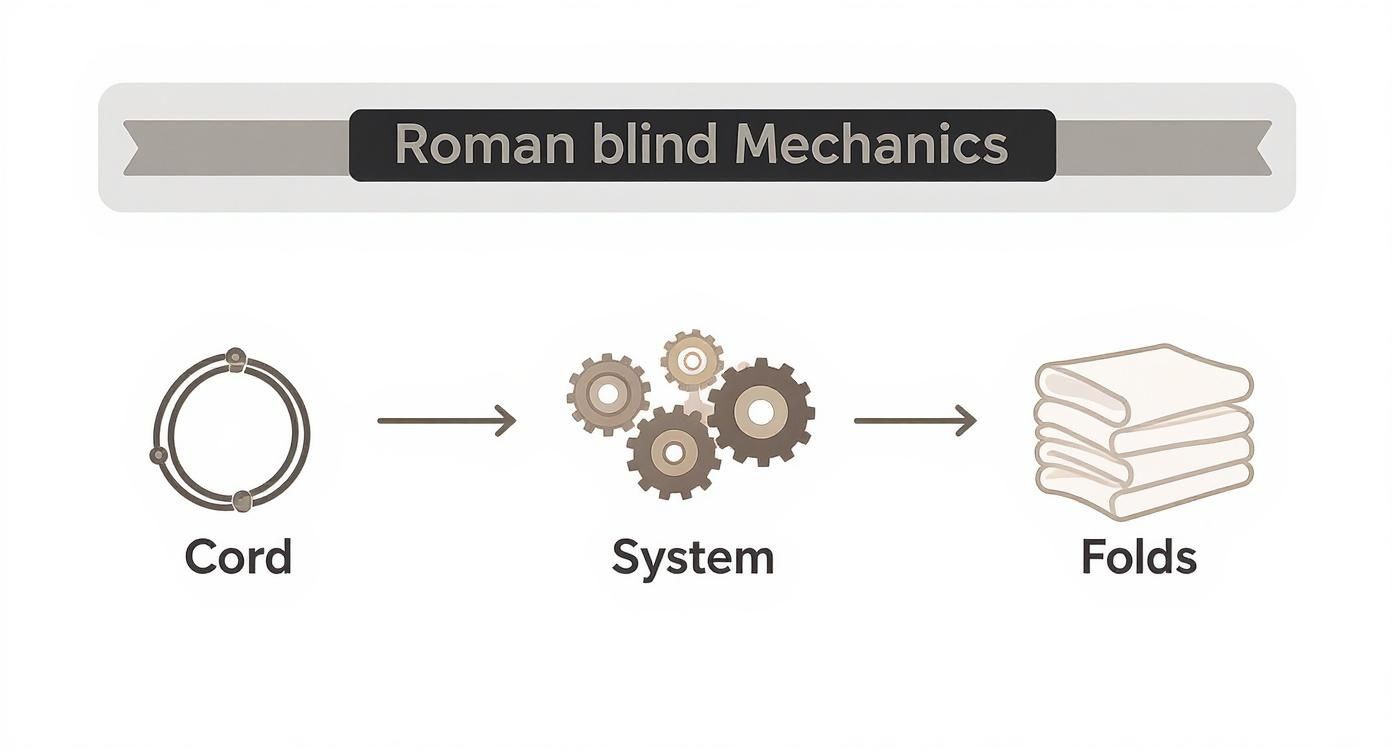
As you can see, a simple tug on the cord translates into the neat, stacked pleats that give Roman blinds their signature look.
Exploring Popular Fold Styles
To help you find your match, let's look at a few of the most popular fold styles. Each one offers a distinct character suited to different rooms and design themes.
Flat Fold: This style is all about clean, minimalist lines. When lowered, the fabric is completely flat, making it the perfect canvas for showcasing bold patterns or vibrant colours. When you raise it, the fabric stacks into crisp, orderly pleats.
Hobbled or Soft Fold: If you’re aiming for a more traditional and luxurious feel, the hobbled fold is a fantastic choice. It’s designed with soft, cascading loops of fabric that remain visible even when the blind is fully lowered, adding depth and a touch of opulence to your window.
Relaxed Fold: Just like its name suggests, this style has a more casual, laid-back vibe. It doesn’t have rigid rods running all the way across, allowing the bottom to curve gently into a soft ‘smile’. It’s perfect for creating a welcoming feel in country-style homes or informal living spaces.
To make the choice a bit clearer, here’s a quick comparison of how these styles stack up.
Comparing Popular Roman Blind Folds
Fold Style | Appearance | Best Suited For |
|---|---|---|
Flat Fold | Crisp, clean, and minimalist. Lies completely flat when down. | Modern interiors, showcasing patterned fabrics, kitchens, and bathrooms. |
Hobbled Fold | Soft, cascading loops of fabric that add volume and texture. | Traditional or formal spaces like dining rooms and master bedrooms. |
Relaxed Fold | A soft, curved bottom with an informal, unstructured look. | Casual living rooms, country-style décor, and creating a cosy atmosphere. |
Ultimately, the fold you choose is a key part of the story your room tells. A flat fold says modern and sleek, while a hobbled fold whispers classic elegance.
Deciding on the right window treatment can be a challenge. For a closer look at how Roman blinds compare to another popular choice, check out our guide on Roman blinds vs roller blinds. It’s packed with insights to help you make the best decision for your space.
Choosing Your Fabric and Lining
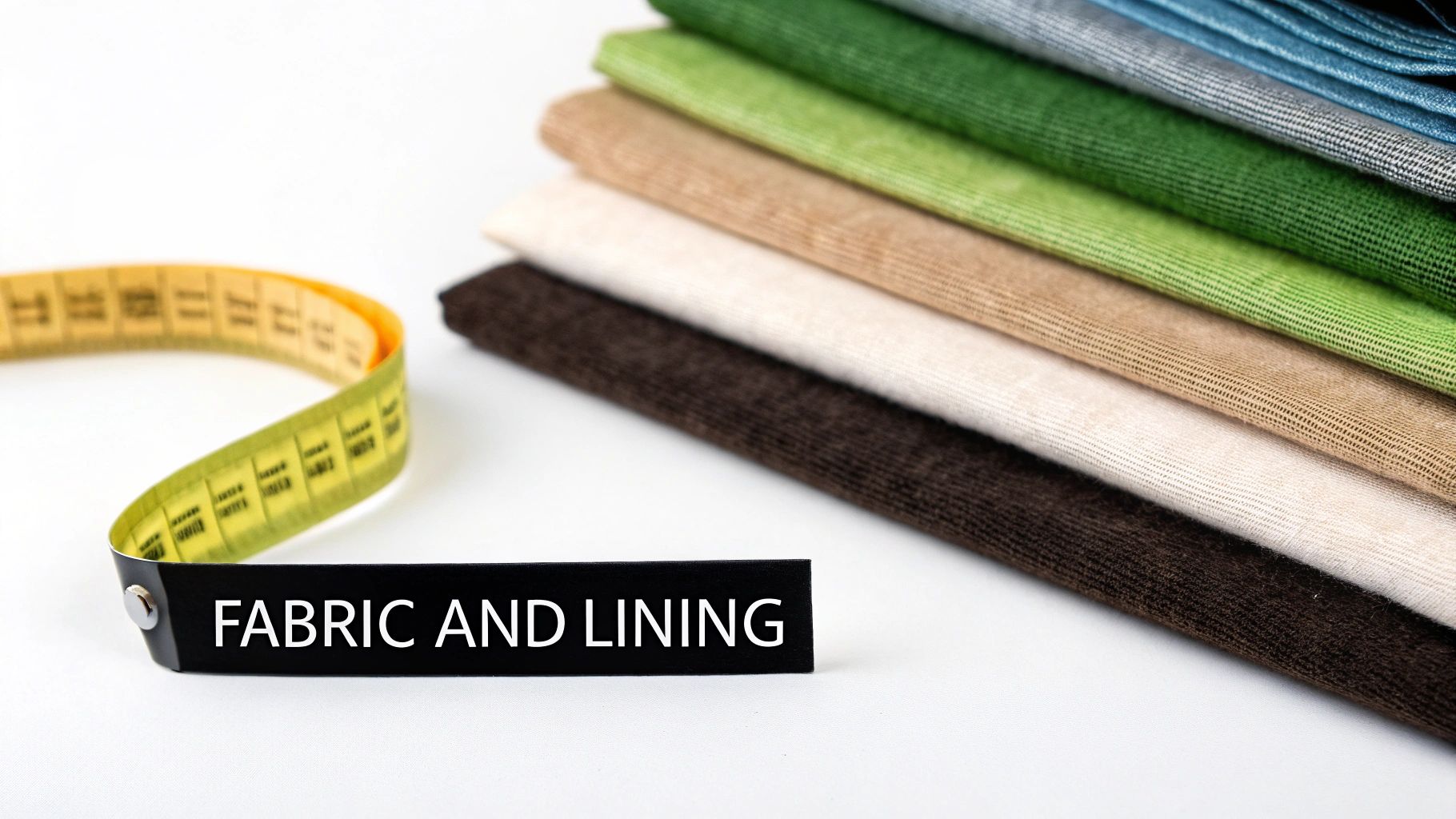
Picking the right fabric for a Roman blind really sets the tone for the entire room. It’s not just about looks; the material you choose has a huge impact on how the blind handles light, privacy, and the overall atmosphere.
If you’re aiming for a light, breezy feel, fabrics like cotton and linen are fantastic choices. They let a gentle, diffused light filter into the room, which is perfect for living rooms, kitchens, or any space where you want a bright and airy vibe without harsh glare.
For a bit more drama and a touch of luxury, you can’t go wrong with richer materials like velvet or silk. These heavier fabrics bring texture and depth to a space, making them a great fit for formal dining rooms or elegant bedrooms. They also do a brilliant job of blocking out light and adding a cosy, insulating layer.
Why the Lining Matters Just as Much
The fabric you see is the style, but the lining is the secret to performance. A good lining transforms a simple blind into a truly functional window treatment, adding benefits that you'll appreciate every day.
Standard Lining: This is your go-to for a clean, professional finish. It protects the main fabric from fading in the sun and helps the blind hang with a lovely, crisp shape. It's a solid choice for most living spaces.
Blackout Lining: An absolute must-have for bedrooms. If you need total darkness to get a good night's sleep, or want to create a cinema-like feel in a media room, a blackout lining is essential. It blocks almost all light from passing through.
Thermal Lining: A smart choice for any UK home. Thermal linings have an insulating layer that helps trap heat inside during winter and keep your rooms cooler in summer. Over time, this can make a real difference to your energy bills.
This blend of style and practicality is a huge part of why Roman blinds are so popular in British homes. In fact, they currently make up about 23.3% of the UK blinds and shades market. With homeowners driving around two-thirds of that market, it’s clear that people value this elegant yet hardworking solution. You can learn more about the growing blinds and shades market to see how trends are shaping our homes.
When you pair the right fabric with the perfect lining, you get a window dressing that’s not just beautiful but works exactly how you need it to for each specific room.
More Than Just Good Looks: The Practical Perks of Roman Blinds
When you choose Roman blinds, you're getting more than just a beautiful window dressing. They offer a clever blend of style and substance that makes them a fantastic choice for pretty much any room in the house.
You get the soft, luxurious feel of curtains but with a much sleeker profile. This is a real game-changer in smaller rooms or minimalist spaces where bulky drapes would feel overwhelming. They give you texture and warmth without eating up valuable floor or wall space.
The real beauty, though, lies in their versatility. With a seemingly endless choice of fabrics, colours, and patterns available, you can design them to be as subtle or as striking as you like. They can either blend quietly into the background or become the standout feature of a room – the choice is entirely yours.
Master Your Room's Light and Temperature
Beyond the aesthetics, Roman blinds are incredibly practical. They give you brilliant control over light and privacy, letting you set the mood in an instant. But it's when you add a special lining that they really start to work hard for you.
Adding a thermal lining is one of the smartest moves you can make. It turns your blind into an insulating layer, trapping heat inside during the winter and keeping the sun’s glare out in the summer. It’s a simple tweak that can genuinely help trim down your energy bills.
If you're keen to explore this further, we have a whole article dedicated to this. Check out our UK guide to energy-efficient window blinds for more tips.
It's no surprise that homeowners are catching on. The European window blinds market was valued at a huge USD 8.3 billion in 2024 and is only expected to grow. This tells us that people are increasingly looking for window treatments that are both beautiful and clever – a box that Roman blinds tick perfectly. You can read more about the European blinds market growth to see where the trends are heading.
Where Roman Blinds Work Best in Your Home
One of the best things about Roman blinds is just how versatile they are. They have a knack for fitting into the unique style and practical needs of almost any room you can think of.
Take the living room, for instance. A Roman blind can easily become a stunning centrepiece. Picking a bold, patterned fabric can draw the eye and pull your whole colour scheme together, giving you a sophisticated, welcoming feel without the heavy bulk of traditional curtains.
Perfecting Bedrooms and Bathrooms
In the bedroom, getting a good night's sleep is the top priority. This is where a Roman blind with a blackout lining can be a real game-changer, especially if you're a light sleeper. It creates that dark, peaceful environment you need to properly rest. For more ideas on creating the perfect sleep haven, have a look at our guide on the best blinds for bedroom windows.
When it comes to kitchens and bathrooms, the challenge is always moisture. The trick is to choose a moisture-resistant fabric, like a polyester blend. This way, your blinds can handle steam and the odd splash without any risk of warping or mildew, blending style with pure practicality.
Roman blinds are a fantastic solution for those tricky bay windows. Fitting a series of perfectly measured blinds to each individual pane of glass creates a clean, seamless finish that follows the beautiful curve of the bay, enhancing the architecture rather than hiding it.
Your Roman Blind Questions, Answered
To finish up, let's get into some of the practical questions that pop up when you're considering Roman blinds. These are the queries we hear all the time, from cleaning worries to fitting them in tricky spots.
How Do You Clean Roman Blinds?
The secret to cleaning your blinds is all in the fabric. For day-to-day dust, a quick once-over with a feather duster or the soft brush attachment on your vacuum is usually all it takes to keep them looking sharp.
If you’ve got a more stubborn mark, you might be able to spot-clean certain fabrics. However, for more delicate materials like silk, it's best to call in a professional dry cleaner. The golden rule is to always check the manufacturer's care instructions before you start – it's the only way to avoid any costly mistakes.
Are They a Good Choice for Kitchens?
They certainly can be, but it’s all about picking the right material. Kitchens are full of steam and the odd splash, so you’ll want to choose a fabric that can handle it, like a durable polyester blend.
A top tip for making them last is to fit them on windows away from the direct line of fire of the sink or cooker. Good ventilation is also your best friend here, as it helps keep the fabric in great condition.
Can Roman Blinds Be Fitted to uPVC Windows?
Yes, absolutely. The most straightforward way is to fit the blind outside the window recess. This means you’ll be drilling into the wall above the window frame, so you don't have to touch the uPVC at all.
If drilling isn't an option, look out for special no-drill brackets. These clever clips attach securely to the window frame itself, giving you a sturdy fit without leaving a single mark. It’s this kind of flexibility that makes them a great solution for almost any window.
Ready to find the perfect made-to-measure window dressing for your space? Explore our extensive collection at Blindsmart and let our team help you create the ideal look for your home. Visit us online at https://www.blindsmart-im.co.uk to get started.
Comments